The topic of the event was to continue to build a COIL (Collaborative Online International Learning) network and to work on promoting and informing about COIL possibilities. The purpose of the event was to do matchmaking of COIL proposals and find the ways to work with the topic further in PIONEER alliance. Virtual exchanges have been known for long but the definition of COIL is a newer term and the importance of virtual exchanges as a learning method is highlighted in the Erasmus+ Programme as a key action. (Erasmus+ 2025.)
 Picture by Macrovector / Freepik.com
Arriving in Cologne
I attended the COIL Network meeting 4-5.11.2025 in our PIONEER partner TH Köln, in Cologne. From Finland it is easy to fly directly to Düsseldorf and from there you can take a direct train to Cologne, which takes about half an hour depending on what kind of train you take. Note that the trains are often late, so prepare a lot of time if you need to catch your plane. In Cologne you can travel easily with their “Stadtbahn”, which is their tram.
TH Köln
The campuses of TH Köln are located on both sides of Rheine, some buildings at Überring close to the centre and for example the campus for engineering on the other side of Rheine. They have campuses also outside of Cologne, in Leverkusen as well, but there is a train connection to Leverkusen too. For exchange students, it is wise to check the location of the campus carefully when searching for accommodation.
Laurea and TH Köln both belong to the PIONEER alliance which is a European Alliance funded by the European Commission (Laurea 2025). TH Köln is our important PIONEER Alliance partner, and this is why it was especially interesting to visit the campus and meet the international colleagues.
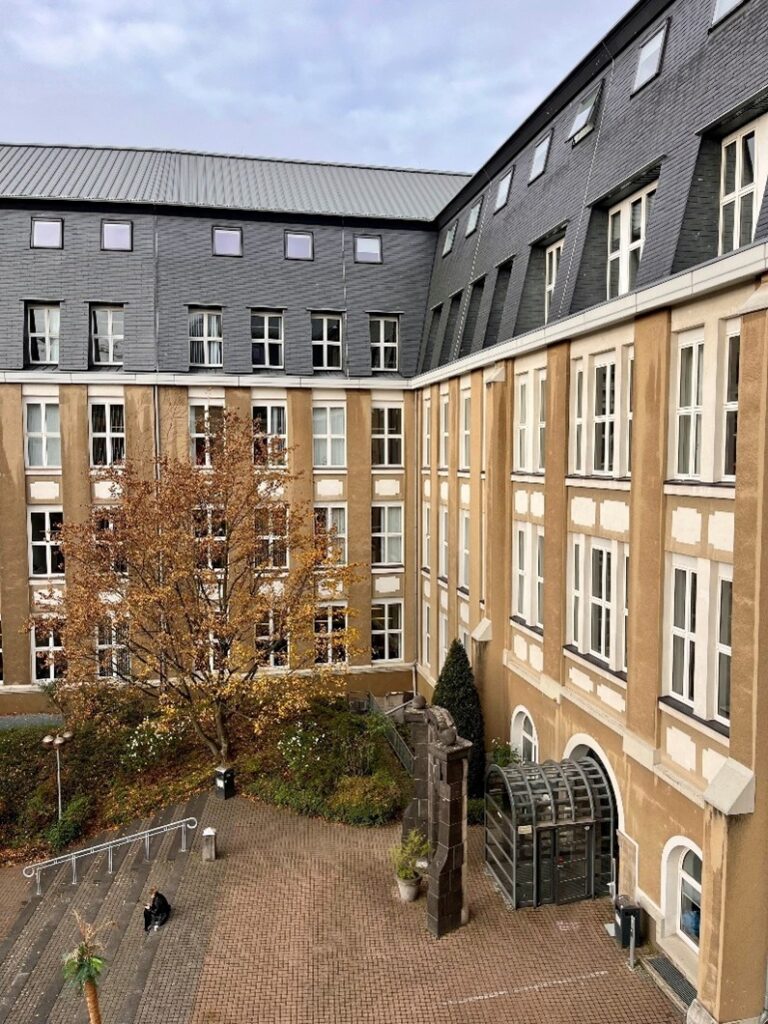 TH Köln campus building, photo by Sini Aalto-Friman
Building the COIL network and the matching process
TH Köln started the initiative with the support of DAAD (Deutscher Akademischer Austauschdienst). I was representing Laurea during this event. We discussed the definitions of virtual mobilities and COILs, which means Collaborative Online International Learning. The goal is to create a COIL network to make it easier to find partners to create COILs with.
In the matchmaking session, there were two groups of experts attending the event; those who teach and present their ideas, and those who enable this. We pitched ideas and proposals that were discussed and collected on a Miro board and there will be a meeting in January 2026 to see if this online matching works and to think about digital database for future in connection with PIONEER Alliance work package 4, which is about Challenge-based Education.
This event was a kickoff to start the process and see how many are interested in this. There is a need for a clear process for COILs, and this will be discussed further on the network. My role in international services is to try to promote COILs and find lecturers to match their counterparts from PIONEER. I must also keep track of lecturers who have done a COIL.
We started the matchmaking process together and checked through the material and produced new material during the event. We had too little time to discuss all the proposals, so the process continues. I added Laurea to be potentially interested in many projects, and I added all Laurea staff member’s ideas to Miro. For the future it is needed to search for a platform for project proposals, in the PIONEER Agora platform is proposed. There has been a “COIL connector website”, but it has not been widely used. After the event I provided the COIL proposals to international development managers at Laurea. They passed the requests on.
Creating COILS
There are two ways to organize a COIL, either that two teachers develop a COIL in two existing courses which is the recommendation, or they develop a COIL together from scratch, but the title and credits must be created and added to for example elective courses. In this case, it is recommended to discuss the resources beforehand.
Some tips for this are that it is wise that there is the same number of credits in both countries for the COIL course. We are collecting promotional materials about COILs, so as a part of evaluation, students could make a video about their experiences of COILs. It is useful to create a script for the COIL course to help you with creating the COIL. One tip from an experienced COIL lecturer is to use Adobe Express for presentations.
PIONEER festival
Each PIONEER university is recommended to organize a PIONEER festival to promote PIONEER alliance and its topics. It is an easy way to organize it as a part of the International Week, as we have done in Laurea as well. It is targeted for both staff and students.
It was the first ever organized PIONEER festival at TH Köln, where we presented our universities to students and staff. Many students were interested in coming to Laurea as exchange students and I discussed with many staff members about future collaborations and visits.
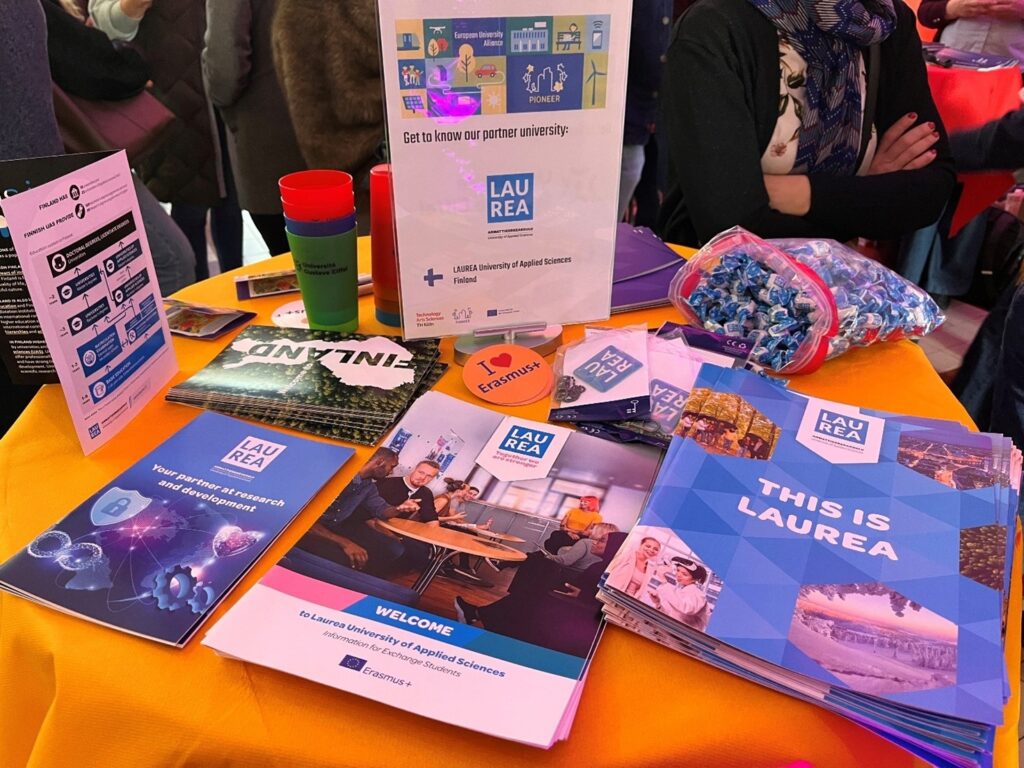 Presenting Laurea at PIONEER festival. Photo by Sini Aalto-Friman
Joint Agenda with WP4 on Challenge Based Education
In the sessions together with WP4 delegates we learned more about Challenge Based Education and designed future visions on how we can combine Challenge Based Education and Collaborative Online International Learning with the LEGO Serious Play session. The Challenge Based Education working group presented cross-university mapping of sustainability focused courses with the aim of creating a shared course catalogue.
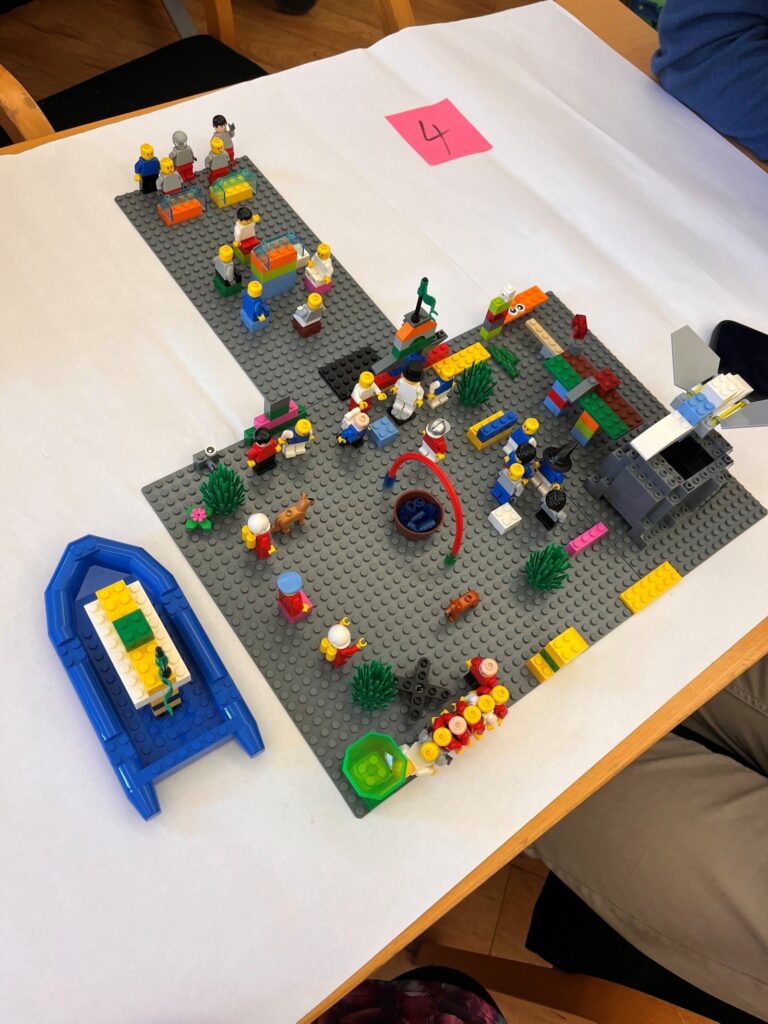 Creating the PIONEER city and COIL. Photo by Sini Aalto-Friman
Visibility, communication and materials of COILs
Materials for COIL promotion will be in Laurea staff intranet of international affairs. The site is under maintenance during the Christmas holidays 2025 and the updates will be done 2026.
There will be for example, a motivation list about creating a COIL for staff members, Questions and Answers (Q&A) list about potential most common questions about COILs, and a guide to create COILs. There will be an European platform later.
One idea is to create a “Wall of Fame for COIL lecturers in Laurea” for them to be seen for their work. Marketing materials can be created, for example, an easy leaflet that can be printed on tables to increase information flow.
Future collaboration
I will promote COILs at Laurea once the materials are ready. This is an exciting opportunity for Laurea language teachers as well. This is important for especially those students who cannot go abroad for longer exchange periods, so this is promoting inclusion and internationalization at home. COIL is a useful pedagogical method especially when Erasmus+ programme is highlighting digitalization skills (Finnish National Agency for Education 2025). This is also a method to reach the high mobility targets of PIONEER Alliance.
A COIL can be a starting point towards a BIP (Blended Intensive Programme) in the future with the partners. COILs are a great way of reaching the high mobility targets in the PIONEER alliance.
There will be a toolbox in WP4 for teachers, basis of course catalogue, COIL could be one instrument in the toolbox. PIONEER alliance partners Avans and Berner Fachhochschule (BFH) are the task leaders for Task 4.2 in WP4, which will start in early December 2025 and run until the end of December 2026. They have also planned to establish a dedicated sub-team for virtual collaboration (including COIL), so there is a designated way to COIL network collaboration thanks to their initiative.
The whole event sparked curiosity and collaboration in the PIONEER Alliance. The sessions were fruitful and led to constructive outcomes. COIL network creates a framework for organizing COILs in a strategic way. This is a great starting point for collaboration, and we continue the work in January 2026 online.
Now it is your chance to learn more about COILs in the event:
The virtual training session of “How do I teach a COIL?”, led by Prof. Jaqueline Bürki (BFH) and Susanne Glaeser (TH Köln) will take place on Monday, 30 March 2026. It will consist of an asynchronous preparation phase and a three-hour live session on 30 March. More info will be published in Laurea intranet news.
References
Materials
