As our autumn entrepreneurship workshops for international talents have concluded and the holidays are approaching, it is the right time to reflect on the elements of success. In this brief article, we present an overview of the workshops that we delivered during October and November 2025, as part of the third cycle of the IMIB Network, which originated from the Immigrants as Business Mentors, IBM project (Laurea UAS 2025).
 Photo by Freepik
Creative exercises help to build trust
The IMIB network (Laurea UAS 2025) supports the employment and entrepreneurship of international talents in Finland. Through our workshops, we encourage international students and international people with higher education backgrounds to recognise their entrepreneurial strengths and provide tools to begin developing their business ideas. All of that may contribute to their belief in self-efficacy, a concept developed by Bandura (1993) referring to cognitive, action/experiential, and motivational processes in a person that gives us a sense of belief in the possible accomplishment of our aspirations. Furthermore, research with international students has looked into entrepreneurial self-efficacy as one key factor influencing their take on entrepreneurship challenges, and their belief in their competences for what such journey entails (Wu et al. 2022; Rasul et al. 2017).
This autumn 2025, we organised five workshops, each lasting two and a half hours. Initially, we aimed at creating an environment of trust, which is essential for the project participants. Our coach, Satu Bethell (senior lecturer at Laurea UAS), facilitates a safe space by bringing her expertise in creative and interactive methods in each workshop. In fact, inviting international people to open about their dreams for their future is not a simple task, and as such is taken with respect and kindness. Small groups also support getting to know each other, reflexivity, and sharing one’s thoughts and ideas.
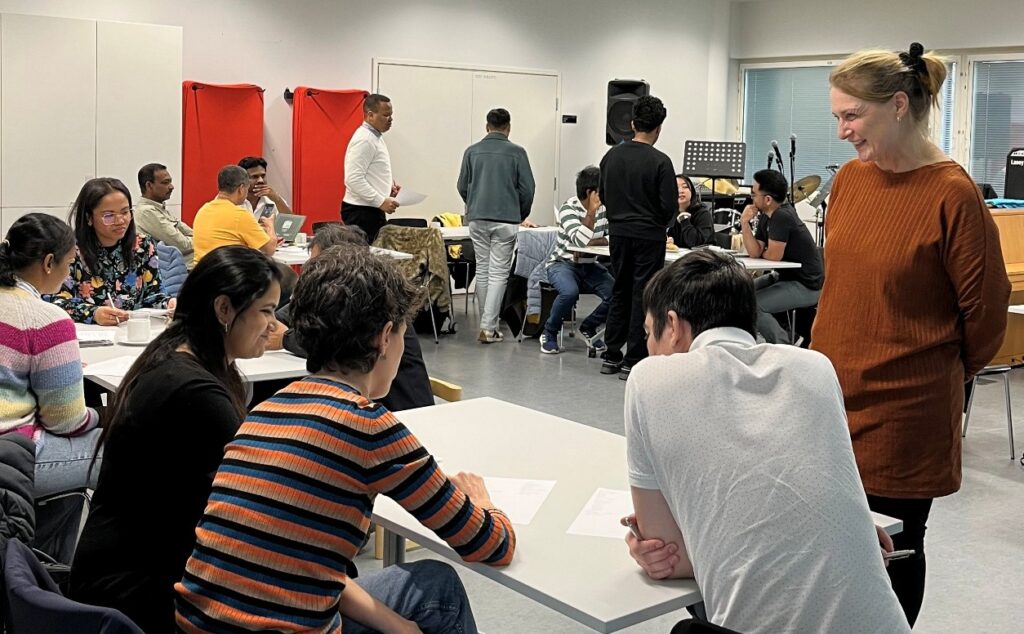 Image 1. Small group work facilitated by our coach Satu Bethell. Source: Berenice Rivera-Macias
Entrepreneurship stories provide inspiration
Entrepreneurship in Finland is a desired outcome for the employment of international talents, and research suggests that while there are services available, more focused and flexible provision alongside policy changes, need to be in place to encourage and facilitate entrepreneurship (Pukkinen at. al. 2024). To contribute to this endeavour, higher education institutions include entrepreneurship in their curricula, not only in Finland but in other countries, to create an informed entrepreneurial education in the students (Shwedeh et al. 2023; Usman & Yennita 2019; Wu et al. 2022). One element offering additional challenges in entrepreneurship education is its internationalisation and how to teach it most effectively so students gain the skills that can take them into the global market (Cumming & Zhan 2018). Internationalisation is of utmost importance to Finland.
In our case, we invite international people who are entrepreneurs in Finland to share their entrepreneurship journeys with our participants. Each expert adds to the content of each session, making it more realistic. In this sense, we contribute to entrepreneurial exposure (Usman & Yennita 2019).
Thus, for instance, in the first session we heard Kate Andryukhina’s story (2025). She also shared tips with the participants about marketing on social media, which is her expertise. At the second workshop, we were visited by Avinash Dhital from Cogknit (2025), who also supported the content of the session on creativity and future oriented thinking. The third workshop focused on understanding how to make your dreams into a business. This was facilitated by Isabella Haas from EDEL City (Dome Upcycling, 2025) (see Image 2), with her vast expertise as an entrepreneur for over three decades. At our fourth workshop, David Cohen from Ainoa Winery (2025) started with his own pitch that he used in SLUSH few years ago, as the session was about pitching your business idea.
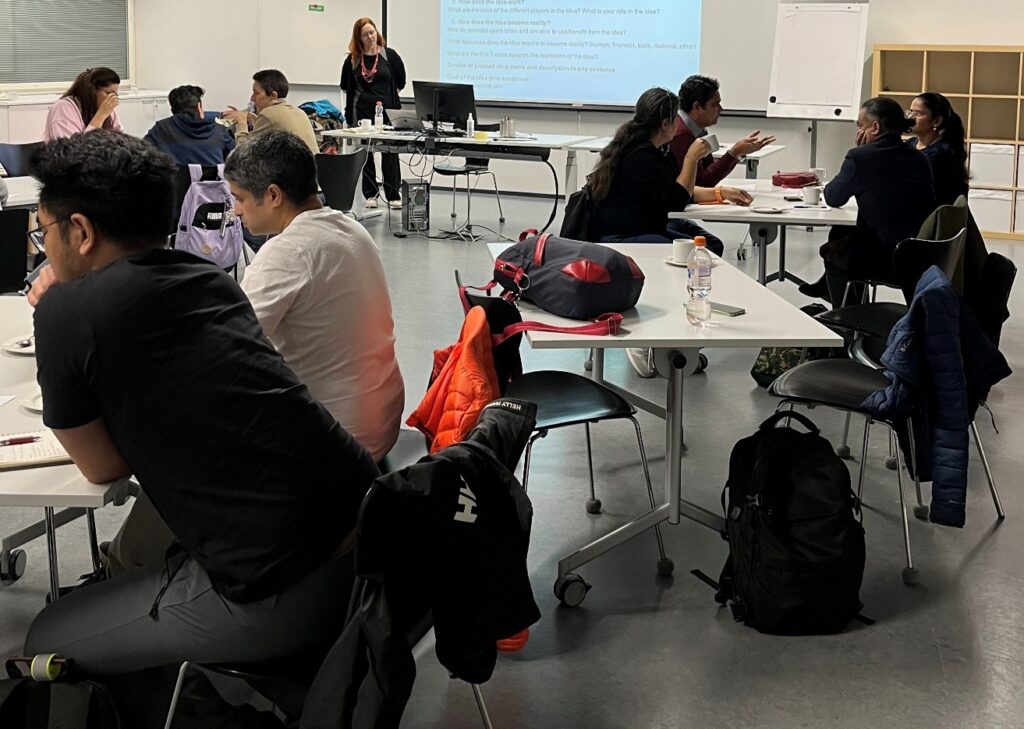 Image 2. Activity led by Isabella Haas, about how to concretise your dream into a business idea. Source: Berenice Rivera-Macias
The fifth workshop, facilitated by our IMIB Network colleague Päivi Käri-Zein from Haaga-Helia UAS, included three international students whose entrepreneurship journeys are different and offer an additional perspective to our participants. By hearing from a variety of experiences, participants can see that entrepreneurship is achievable at any time of your life, and that success depends on different elements such as being clear about your passion and finding the focus for pursuing it.
Support beyond the workshops
We also support the entrepreneurial journey of the participants between the workshops and after. Between the workshops, participants have the opportunity of receiving one-to-one mentoring from an expert colleague. This aims at contributing to their own development and to their participation in the IMIB Network. At the end of the cycle, we hold a reflective discussion on how the coaching has supported participants’ journeys. They are also invited to project networking events, such as the end of cycle event that we organised at Tikkurila campus in November 2025 (See Image 3). Finally, before the next cycle begins, we check in on their business ideas and offer further support or mentoring if needed.
Creating an environment of trust encourages participants to share ideas, build confidence, and benefit from inspiring entrepreneurship stories, practical tips, and optional one-to-one mentoring. With another cycle of workshops ahead, participants’ feedback continues to shape and improve our service.
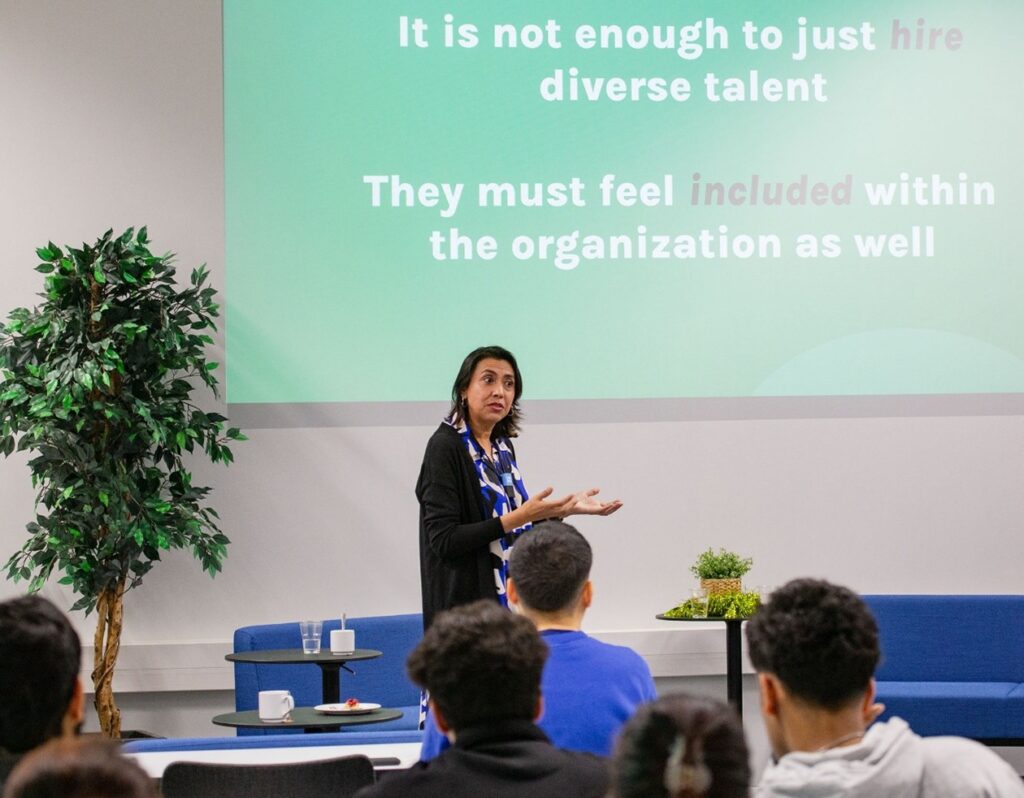 Image 3. Yesmith Sánchez from Inklusiiv giving the Keynote speech. Source: Ilpo Vuorivirta, Laurea UAS.
Conclusion: Key lessons
Regarding the best practices we have identified, using creative and interactive methods helps build a safe environment where newcomers develop confidence in themselves and trust one another. Such process takes time, but we provide the time in our workshops. Additionally, participants report feeling inspired by the entrepreneurial stories of our diverse guests. The interactions between guest international entrepreneurs and workshop participants create thought-provoking conversations that stay with them. Some guests have given feedback on the business ideas from the participants; for instance, it was mentioned that the ideas were realistic and pursuable. Finally, participants value the networking opportunities and requested more time for that. Nevertheless, this is borderline challenge, as it would require longer workshops, which we will experiment with in the last cycle.
Amongst the challenges, we recognise that low participation remains an issue. Although there were more participants during this cycle, it is still difficult to engage people. That may be due to a large range of workshops and services available on the topic, in addition to the target group having many other activities in their everyday lives. Possible solutions may include more targeted marketing and communicating clearly about our offer and what differentiates us from the rest.
Lastly, we proved that focusing on competence strengthening is highly valued and needed, because a business idea can originate from knowing oneself better, as entrepreneurship demands resilience and high levels of perseverance. Also, collaborating in an environment of trust facilitates creativity and innovation, reflected in the participants’ business ideas.
The Immigrants as Business Mentors project is co-funded by the European social fund (ESF+). The project is coordinated by Haaga-Helia UAS, and Laurea UAS and Metropolia UAS act as project partners.

Authors
- Berenice Rivera-Macias (PhD) works as an RDI specialist at Laurea UAS.
- Pauliina Pöyry (M.Soc.Sc.) works as an RDI specialist at Laurea UAS.
References
- Andryukhina, K. 2025. KA Concept Illustrator.
- Ainoa Winery. 2025.
- Bandura, A. 1993. Perceived Self-Efficacy in Cognitive Development and Functioning. Educational Psychologist, 28 (2), 117–148.
- Cogknit. 2025. Cogknit. Discovering Futureself.
- Dome Upcycling. 2025. Dome Upcycling. Upcycled Wonders.
- Cumming, D. & Zhan, F. 2018. International Entrepreneurship Education, Journal of Teaching in International Business, 29 (3), 181-184.
- Laurea UAS. 2025. IBM – Maahanmuuttajat yritysten mentorina (Immigrants as Business Mentors).
- Pukkinen, T., Rättilä, T., Aaltonen, O., Montonen, T., Aaltonen, S., Elkina, A., Hytti, U., Parkkari, P., Pesonen, J., & Pulkkinen, T. 2024. How to Promote the Employment and Entrepreneurship of Highly Skilled Internationals in Finland? HIWE – High-Skilled Internationals: Bottom-Up Insights into Policy Innovation for Work and Entrepreneurship in Finland.
- Rasul, O., Bekun, F. V., & Saint Akadiri, S. 2017. The impact of self-efficacy on international student entrepreneur intention. International Review of Management and Marketing, 7 (1), 169-174.
- Shwedeh, F., Adelaja, A. A., Ogbolu, G., Kitana, A., Taamneh, A., Aburayya, A., & Salloum, S. A. 2023. Entrepreneurial innovation among international students in the UAE: Differential role of entrepreneurial education using SEM analysis. International Journal of Innovative Research and Scientific Studies, 6 (2), 266-280.
- Usman, B., & Yennita. 2019. Understanding the entrepreneurial intention among international students in Turkey. Journal of Global Entrepreneurship Research, 9 (10).
- Wu, J., Alshaabani, A., & Rudnák, I. 2022. Testing the Influence of Self-Efficacy and Demographic Characteristics among International Students on Entrepreneurial Intention in the Context of Hungary. Sustainability, 14 (3), 1069.
