Amid the historic charm of Bologna, higher education professionals from across Europe gathered in November 2025 to rethink what internationalization truly means. From reimagining development cooperation to integrating foreign students into local communities, and from tackling internal coordination challenges to engaging in science diplomacy, the conversations were both timely and transformative. This article reflects on key insights from the week and considers what they might mean for Laurea’s own journey toward socially responsible global engagement.
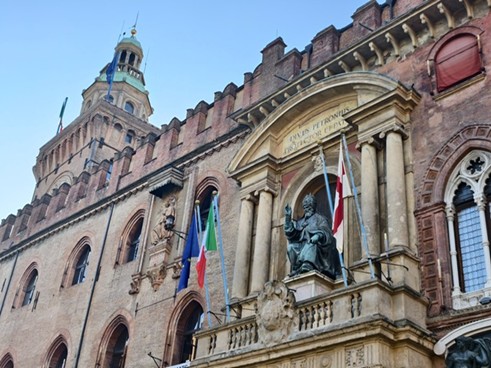 Picture of a church in Bologna. Picture taken by Maryan Hussein
In November 2025, I had the opportunity to participate in a staff week hosted by the University of Bologna, Europe’s oldest university and a central force in the evolution of higher education. We met with colleagues from across Europe and beyond to discuss the complexities and aspirations of internationalization today. This was not merely a workshop about increasing mobility numbers or strengthening institutional branding, but instead, it was an invitation to examine internationalization as a strategic, ethical, and deeply transformative process that can reshape not only institutions but society.
What emerged over these sessions was a rich tapestry of ideas about the need to rethink how we organize our international work internally, the importance of building partnerships that go beyond transactional exchange, and the growing role of universities in diplomacy, global responsibility, and societal resilience. Each university shared its own challenges and innovations, prompting reflections that I believe are especially relevant for Laurea as we continue to develop our international profile.
Why Higher Education Matters Now: A Philosophical Reflection
Perhaps the most memorable moment of the week was Vice-Rector Raffaella Campaner’s keynote. She challenged us to think not just about internationalization strategy, but about the very purpose of higher education in 2025. In a world marked by polarization, social fragmentation, and distrust in scientific expertise, universities have a responsibility to reaffirm their importance not only as places of teaching and research, but as spaces of democratic dialogue and civic engagement. (Campaner 2025.)
Campaner stressed in her speech that universities must stay committed to knowledge production, civic engagement, and the defense of academic freedom. These core values, she argued, are essential to maintaining universities’ roles as trustworthy institutions in society. More importantly, she called on universities to embrace “science diplomacy,” an emerging field in which universities contribute to international relations through research, knowledge exchange, advisory work, and informal diplomacy. (Campaner 2025.)
This resonated deeply with the broader discussions throughout the week. If internationalization is ultimately about strengthening global cooperation, then universities are not simply logistical hubs for mobility, but in fact they are agents of peace, understanding, and shared knowledge. In this sense, internationalization must be rooted in ethics and purpose, not just operational efficiency.
Moving Beyond Strategy Documents: Lessons from Bologna and Antwerp
The University of Bologna, with its nearly thousand-year history, offers a comprehensive and dynamic approach to internationalization. Rather than delegating international work to a single unit, Bologna has distributed responsibility across multiple levels of governance, integrating internationalization into teaching, research, social engagement, and institutional identity. It’s a framework that reflects both ambition and complexity.
Yet even such a well-developed structure has its challenges. Bologna’s team openly acknowledged the difficulties of coordinating international activities across numerous units and departments. Internal communication can falter, leading to duplication or blind spots. The roles and responsibilities of staff working on international tasks are not always clearly defined, and the ambition to translate policy-level strategies into concrete action requires ongoing effort, particularly in faculties and support services. These issues are also defined in the university’s strategic plan, where goals have been set to try and tackle them. (University of Bologna Strategic Plan 2022-2027.)
What stood out in Bologna’s case was not that they had plans to resolve all these tensions, but that they addressed them with transparency and purpose. Their emphasis on documenting global-impact projects beyond traditional research functions — including student engagement, community partnerships, and development collaborations — offered a valuable template for Laurea. By highlighting how internationalization delivers real value to society, Bologna strengthens both internal motivation and external recognition.
The University of Antwerp, like Laurea, has opted for a more centralized model, where a strong international office coordinates key areas such as student mobility, recruitment, partnerships, and international staff services. Antwerp has an impressive proportion of international students, around 20 %, which is roughly double compared to the Belgian average and has invested in developing partnerships in Latin America and Africa, partially driven by their staff members’ discipline-based networks (Eurostat 2025; Bruyndonx 2025) .
However, this centralization brings its own set of structural challenges. Antwerp recognizes issues of overlapping communication channels, blurred boundaries between units, and a proliferation of committees and working groups that sometimes complicate rather than streamline international workflows. (Bruyndonx, 2025.) Their experience mirrors our own in many ways and invites us to consider how we might better define decision-making authority, clarify roles across teams, and avoid inefficiencies that come from well-intentioned but fragmented initiatives.
Both Bologna and Antwerp represent models with clear strengths, but neither offers a perfect solution. This tension, between integration and specialization, centralization and distributed leadership, is inherent in internationalization. The key takeaway is not that one model is superior to another, but that any approach must be consistently evaluated and adapted to support meaningful impact rather than simply structure for structure’s sake.
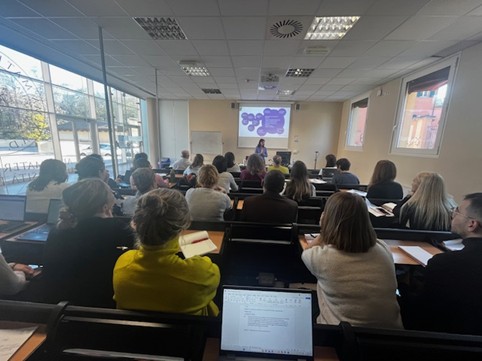 Picture from the first day of the staff week in Bologna University. Picture taken by Maryan Hussein
Rethinking Engagement: XAMK’s Community-Centered Approach
One of the most refreshing examples came from Finland — specifically from South Eastern Finland University of Applied Sciences (XAMK), whose model bridges tuition incentives with local engagement opportunities for international students. Their XAMK Awards Scholarship scheme rewards students with up to 35 % tuition discounts when they participate in volunteering, community projects, or extracurricular activities. In other words, XAMK is not merely waiving tuition fees — it is explicitly recognizing students’ contributions to Finnish society and supporting their integration into local work environments. (Hirvonen 2025; XAMK 2025.)
It is a clever and compassionate approach, especially within the Finnish context where retention of international graduates remains a major national concern (Pitkänen & Välimäki 2023). By creating meaningful opportunities for students to build roots in local communities, XAMK not only enriches the student experience but also addresses broader societal and economic needs. This highlights a key insight: internationalization does not have to be defined by outbound mobility or international recruitment alone. It can also mean building attractive environments for international students to stay, contribute, and thrive locally.
For Laurea, this provokes thought. How might we connect tuition structures or student engagement more explicitly to social responsibility and integration? Could we create dynamic systems that encourage mutual benefit between international students and our surrounding communities? Though not immediately transferable at scale, the XAMK model offers powerful inspiration for reframing internationalization in terms of community building, inclusivity, and long-term contribution.
From One-Way Development to Partnership: Bologna’s Cooperative Model
Perhaps the most transformative session came from Bologna’s Development Cooperation Office. Traditionally, “development cooperation” has carried connotations of one-sided support, more a transfer of expertise or resources from the Global North to the Global South. Bologna is deliberately moving away from that model, redefining development cooperation through the lens of partnership, shared responsibility, and reciprocal growth.
What makes their approach compelling is how deeply they integrate social impact and academic work. Programs like their Field Work internship place students in NGOs and grassroots organizations in Global South countries, funded through a combination of university resources and external grants. These projects aren’t just for student benefit. They build local capacity, strengthen institutions, and expand the university’s understanding of what social responsibility can look like in an international context.
The session exposed a central question: Should development cooperation remain separate from mainstream internationalization work, or should it be integrated into broader strategies for global engagement? For Laurea, with its strong emphasis on applied learning, research, and practical development, the opportunity to weave together mobility, development, and social responsibility seems both natural and necessary.
However, for this integration to succeed, a few things must happen. Staff must be supported to lead these initiatives, funding must be accessible and sustainable, and cross-department cooperation must become the default rather than the exception. These are challenging structural questions, but they are also exciting ones, especially for institutions like Laurea that already value global citizenship and societal impact.
Networking and Alliances: Bridges or Walls?
One recurring theme throughout the week was the role of international networks and alliances. Bologna participates in a wide range of them, from policy-focused platforms like the European University Association, thematic groups such as Scholars at Risk, to region-based initiatives like UNIMED, which supports Mediterranean cooperation. Each network provides opportunities for visibility, knowledge exchange, and alignment with influential agendas.
But like any form of partnership, networks come with risks, primarily the danger of siloing. Too often, knowledge gained through participation stays with the individuals involved, without translating into institutional change. Universities must find ways to ensure horizontal knowledge flow so that international activities reflect collective goals rather than isolated efforts.
European alliances, which are funded through the European Universities Initiative, are designed to address this by creating deep, structural collaboration between institutions (European Education Area 2025). However, as we heard in Bologna, the reality is more complex. While alliances foster collaboration not only across faculties but also between administrative units like HR and finance, they can also introduce new bureaucratic layers and governance structures that complicate rather than streamline cooperation. The optimism surrounding these partnerships must be tempered by critical reflection: are we creating inclusive structures, or inadvertently replacing old silos with new ones?
For Laurea, both the opportunities and risks are clear. Laurea is a part of PIONEER Alliance since the start of 2025 and the participation in alliances and networks can be energizing and transformative; but only if they are managed in ways that genuinely support institutional strategy and reduce fragmentation. Engagement must be intentional, and the knowledge generated must be shared widely, rather than held by a select few.
What This Means for Laurea
Drawing from the rich discussions of the week, several important reflections stood out. First, Laurea has an opportunity, and perhaps a responsibility, to better showcase its ongoing global-impact projects, not just to external partners but internally, to strengthen shared understanding of our mission. Second, we must clarify roles within internationalization, especially where development cooperation, social impact, and research intersect. Third, we need a clear regional strategy that goes beyond historical partnerships and focuses on areas where we can contribute meaningfully. Fourth, we should invest in reducing internal fragmentation by strengthening communication and cross-unit structures. And finally, we must benchmark our financial and resource sustainability with peer institutions to ensure our internationalization is robust and resilient.
At the heart of all this lies a deeper question: how can Laurea move from being a participant in global discussions to positioning itself as a leader in socially responsible internationalization? We already have many of the building blocks, such as applied learning, social impact, strong partnerships, but leadership requires clarity of vision, strategic prioritization, and the courage to innovate.
Conclusion: Toward Purposeful Internationalization
The staff week in Bologna was more than a series of presentations. It was a space for reflection, challenge, and hope in a time when global cooperation is both essential and fragile. Internationalization in higher education is not simply a technical function: it is an ethical project. It demands that we move beyond mobility numbers and strategic plans to ask questions about purpose, equity, impact, and global citizenship.
For Laurea, the journey ahead is both complex and full of possibility. If we embrace internationalization not as a checklist of actions, but as a means to fulfill our mission as a socially responsible institution, then we have a chance to influence not just our own community, but the world around us. And that, ultimately, is why internationalization matters.
References
Unpublished references
- Bruyndonx, Willem. International Relations at our Institutions: The Cross-Cutting Approach. Presentation during the Staff week, 11.11.2025
- Campaner, Raffaella. Vice-Rector for International Relations, University of Bologna. Keynote Speech on Knowledge Diplomacy. 14.11.2025
- Hirvonen, Henna. Case Studies on the Cross-Cutting Approach. Presentation during the Staff week. 13.11.2025
AI has been used to help with structuring and refining the text.
