What happens when 29 experts from across Europe step into a living lab for integration and language learning? Our VOIKO team welcomed participants of the EU Social Innovation Initiative, turning theory into practice through music, multilingualism, and co-design. From humming and body percussion to creating a “multilingual sun,” the visit showcased how inclusive language learning can spark creativity, build trust, and celebrate diversity.
On 12.11.2025 our Empowering and Inclusive language learning (VOIKO, co-funded by ESF+) project team was delighted to welcome 29 international participants from the EU Social Innovation Initiative event “Uniting Efforts: From Material Support to Skills Development for a Strong Social Europe” to explore activities in our project (Figure 1).
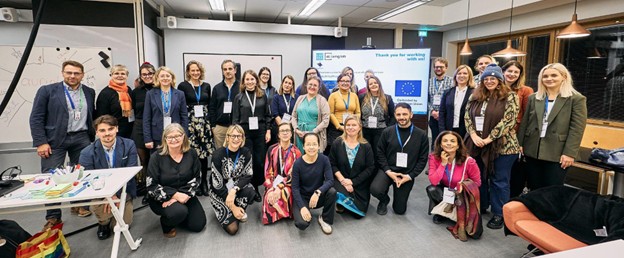 Figure 1. The study visit participants (photo by Pekka Välimäki)
This event brought together experts and project actors from 25 European countries to discuss how material support and skills development can be combined to strengthen employment and social inclusion across Europe. In addition to VOIKO, the experts got a chance to learn about Espoo city integration services and another exciting project From Home to Work (Kotoa kohti työelämää, ESF+ (2023-2025). The project strengthens migrant stay-at-home parents’ language skills and work-life competence through functional Finnish lessons, career guidance, workplace orientation, and activities that support well-being and community. It also offers clubs for participants’ preschool-aged children at the same location, partly together with parents, to improve family integration and encourage planning for employment or studies (Kotoa kohti työelämää – kokonaisvaltaista kotoutumista maahanmuuttajavanhemmille | Omnia).
Embodied and musical language learning examples
The purpose of this study visit was to demonstrate practical examples of the project activities. The VOIKO team’s Alina Leminen presented the planned project activities, in which she made a compelling research-based case on the importance of home languages to multilingual children’s identity and language development. She also presented the latest activities and future action points of the project. Our activities include a forthcoming MOOC, developed by Pia Nummila and Berenice Rivera-Macias, on empowering methods for early childhood education and care (ECEC) staff. The MOOC presents concrete methods on how to empower and support multilingual families, including insights from positive education to support parents in both parenting and preserving their home language and culture. Both are crucial for children’s Finnish language learning and successful integration.
The participants were thrilled to get to know the Tempo bear, a character supporting language learning, and developed and presented by Tina Iiskola. The Tempo bear (Figure 2) connects music, songs, and playful activities to strengthen learning of Finnish and home languages through multisensory input and inclusive and language-responsible pedagogy.
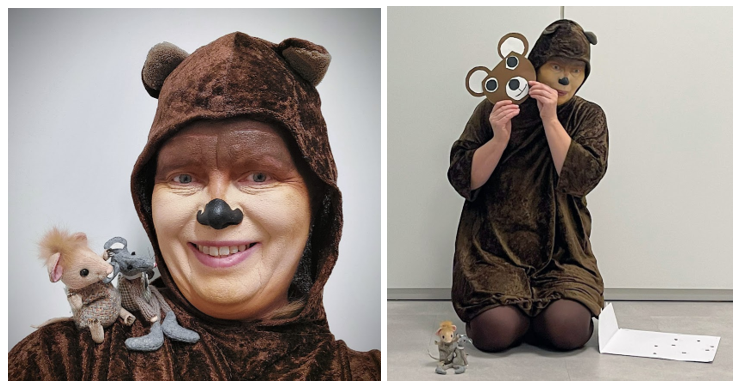 Figure 2. Tempo bear (photo by Tina Iiskola, photo by Sara Adler)
To give the visitors a direct experience of embodied, multilingual and musical language learning (e.g., Jusslin et al., 2022), our University of Helsinki partner Ying Yang led an interactive activity. We began with humming, moved into simple body percussion, and then introduced a Finnish children’s song- all centered around the theme word aurinko (“sun”). After singing together, Ying invited all participants to write the word aurinko in their home languages, collaboratively creating a multilingual sun in the darkness of November (Figure 3). Using the same melody, we then sang the word in several languages, bringing the diverse languages and backgrounds in the room to life. This kind of multisensory and multilingual music activity will be implemented as part of VOIKO pilotable tools.
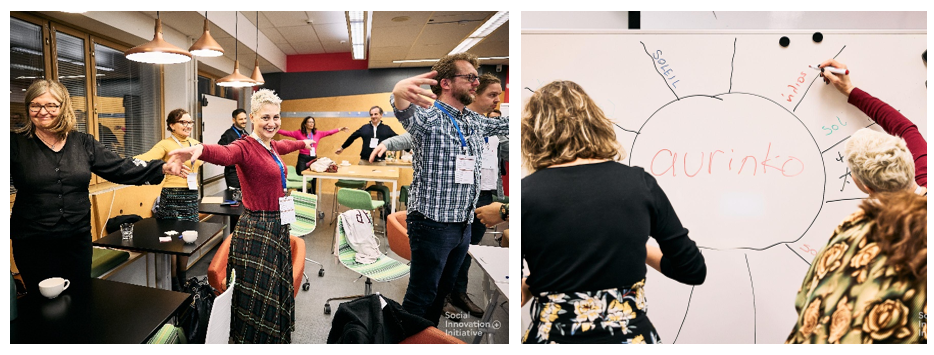 Figure 3. An example of multisensory and multilingual activity led by the University of Helsinki (photos by Pekka Välimäki)
Collaborative development
The core approach of Laurea’s VOIKO team is the living lab methodology and social co-design. In this model, development is grounded in real-life ECEC contexts and carried out collaboratively with educators, families, and other stakeholders. The Living Lab approach emphasises iterative development, where participants are not only informants, but active co-creators of new practices, tools, and understandings. Social co-design, in turn, means for example supporting inclusive participation and ensuring that diverse linguistic and professional perspectives are taken into account throughout the development process within the socially motivated design context. (Lydén, Suoheimo, Leminen & Miettinen, 2023; Zivkovic, 2018)
To demonstrate how we work with the ECEC staff and multilingual families, Hilkka Lydén held a workshop with all the participants. In the workshop, the participants jointly reflected on how VOIKO activities about which they just heard are connected with their own experiences, and how they are related to their own work (Figure 4). This reflective process functioned as both a learning activity and a starting point for continuous development, supporting the transfer of co-designed practices beyond the project setting.
The feedback collected after the on-site event shows that participants found the visit both inspiring and worthwhile. The average satisfaction rating was 4.86 out of 5, with nearly all attendees giving the highest possible score. Participants especially valued the opportunity to meet colleagues from a wide range of professional and linguistic backgrounds and to learn about innovative multilingual teaching practices. Many commented on how the VOIKO project’s social co-design approach offered a concrete and transferable model for collaborative development. Several participants noted that this way of working supported professional learning and sustainable development and was something they would like to apply and further develop in their own professional contexts.
Several respondents mentioned how inspiring it was to see music creatively integrated into language education, illustrating how the arts can support linguistic and cultural learning. Others praised the open and respectful atmosphere, noting that every voice was heard and cultural diversity was celebrated as a strength. Comments such as “The variety of profiles and expertise in the team was fantastic” and “I really loved learning about the different multilingual approaches” capture the spirit of the day.
Suggestions for improvement were minimal, with most participants simply stating “Nothing” or “Nothing, I really loved it!” which is a clear sign that our study visit program’s format and content resonated strongly.
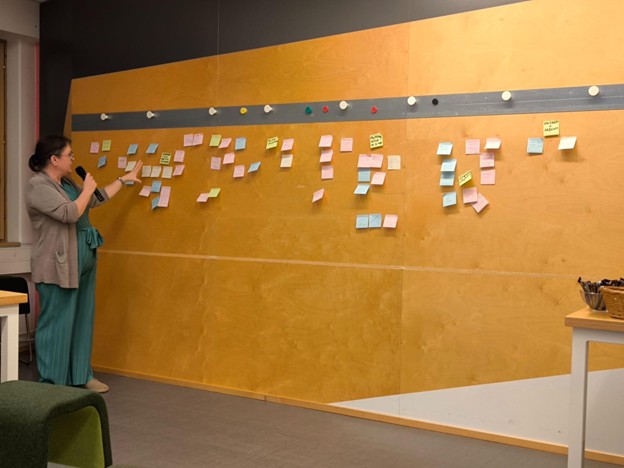 Figure 4. Hilkka Lydén is presenting the results of the workshop with the participants on skill building and exchanging practices (photo by Ying Yang)
Conclusion
The take-home messages and lessons learned from the study visit were, according to the feedback provided to the organizers of the EU event were:
- the importance of interactive learning methods in language learning,
- co-creation/co-design in working with the target group,
- evidence-based practices and solid research background in development projects,
- multilingualism should be seen as strength, and not only as a challenge,
- language learning by doing,
- the importance of building trust.
As highlighted by several participants, every individual has their special story. Our task is to listen and engage.
This publication is part of the VOIKO project (2025–2027), funded by the European Social Fund (ESF+), coordinated by Laurea University of Applied Sciences. The project aims to develop tools that support multilingualism for use by early childhood education professionals. The University of Helsinki is also participating in the project.

References
- Jusslin, S., Korpinen, K., Lilja, N., Martin, R., Lehtinen-Schnabel, J., & Anttila, E. 2022. Embodied learning and teaching approaches in language education: A mixed studies review. Educational Research Review, 37, 100480.
- Lydén, H., Suoheimo, M., Leminen, A., & Miettinen, S. 2023. Immigrant Integration through Codesign – A Journey Map of integration into working life. IASDR Conference Series.
- Zivkovic, S. 2018. Systemic innovation labs: a lab for wicked problems. Social Enterprise Journal, 14(3), 348–366.
We used AI in analyzing the workshop feedback results and summarizing them as well as in writing the abstract. All the AI generated texts were subsequently verified and modified by the authors.
