
Outi Loikkanen
19.5.2026
What does it feel like to give your first international conference presentation in English to an audience of researchers and educators from different countries? In spring 2026, IDEAS’26 conference in Porto offered an opportunity to discuss sustainable digital education, artificial intelligence and the future of higher education in an international context. This article reflects the experience.
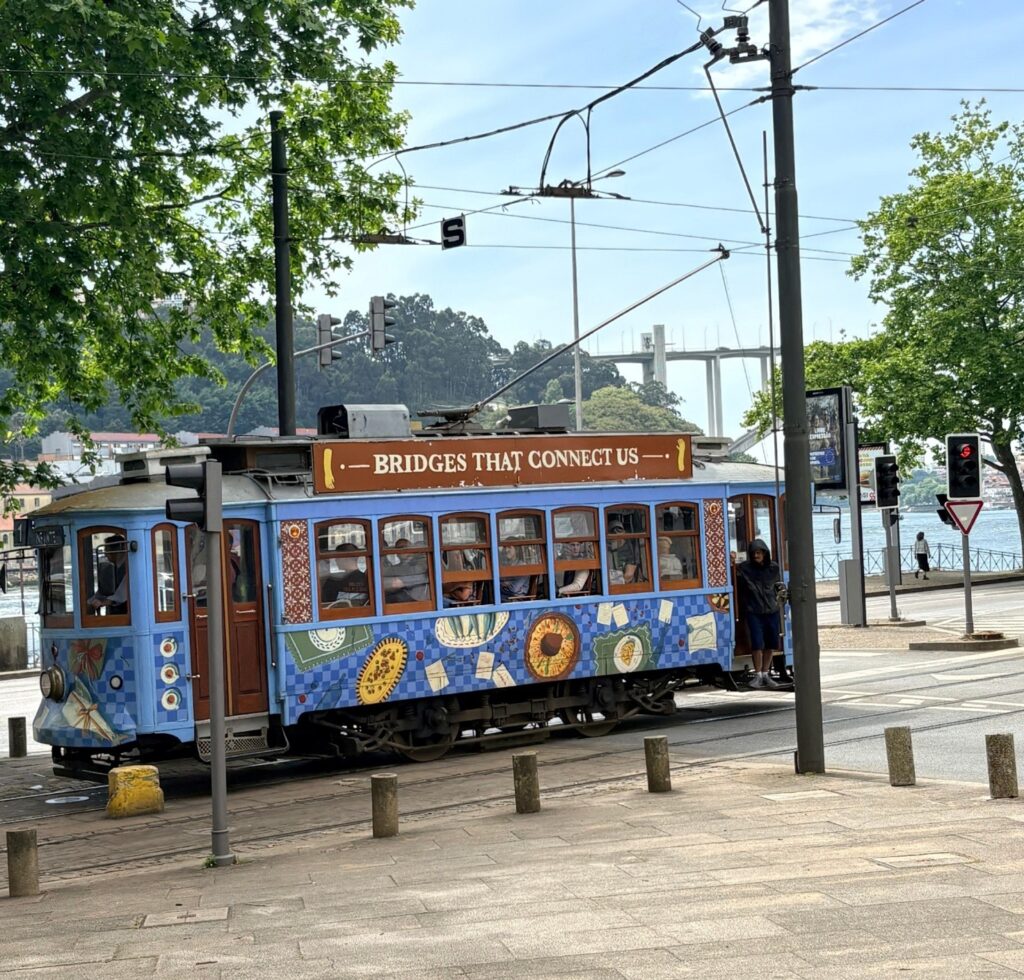
Picture 1: Outi Loikkanen
First International Conference Experience in Porto
In May 2026, I participated in an international conference for the first time as a presenter. The conference, IDEAS’26 – International Conference on Innovation, Digital Education, Artificial Intelligence and STEAM, was held in Porto, Portugal. The event focused on themes such as digital education, artificial intelligence, innovative pedagogies, learning environments and sustainable education in a digital era (IDEAS’26 2026).
One of the most interesting aspects of the conference was its practical and approachable atmosphere. IDEAS’26 brought together both researchers and professionals who wanted to share experiences, projects and educational experiments related to digitalization and teaching. Instead of highly theoretical discussions, many presentations focused on practical development work, real teaching contexts and the everyday challenges that educational institutions are currently facing.
Several themes repeated throughout the conference program. Artificial intelligence was naturally visible in many presentations, but sustainability, future skills and the changing role of higher education were also strongly present. Many speakers discussed how educational institutions are trying to respond simultaneously to rapid technological development, changing competence needs and decreasing government funding.
Porto itself provided an excellent setting for the event. Known for its historic riverside district and long cultural history, the city is also recognized as a UNESCO World Heritage site because of its well-preserved historic center (Visit Porto 2026). During conference breaks and evening discussions along the Douro River, networking often continued informally with other participants. These conversations were in many ways just as valuable as the official program itself.
Presenting Green ICT in Higher Education
My own presentation focused on Green ICT themes in Business Information Technology education. Rather than presenting a formal educational model, I shared practical experiences of integrating sustainability-related topics into existing ICT teaching. The presentation described how themes such as energy-efficient coding, lifecycle thinking, data centers, AI-related energy consumption and responsible digital decision-making had been introduced as part of everyday teaching practices. The contents of my presentation have been summarized in picture 1 below.
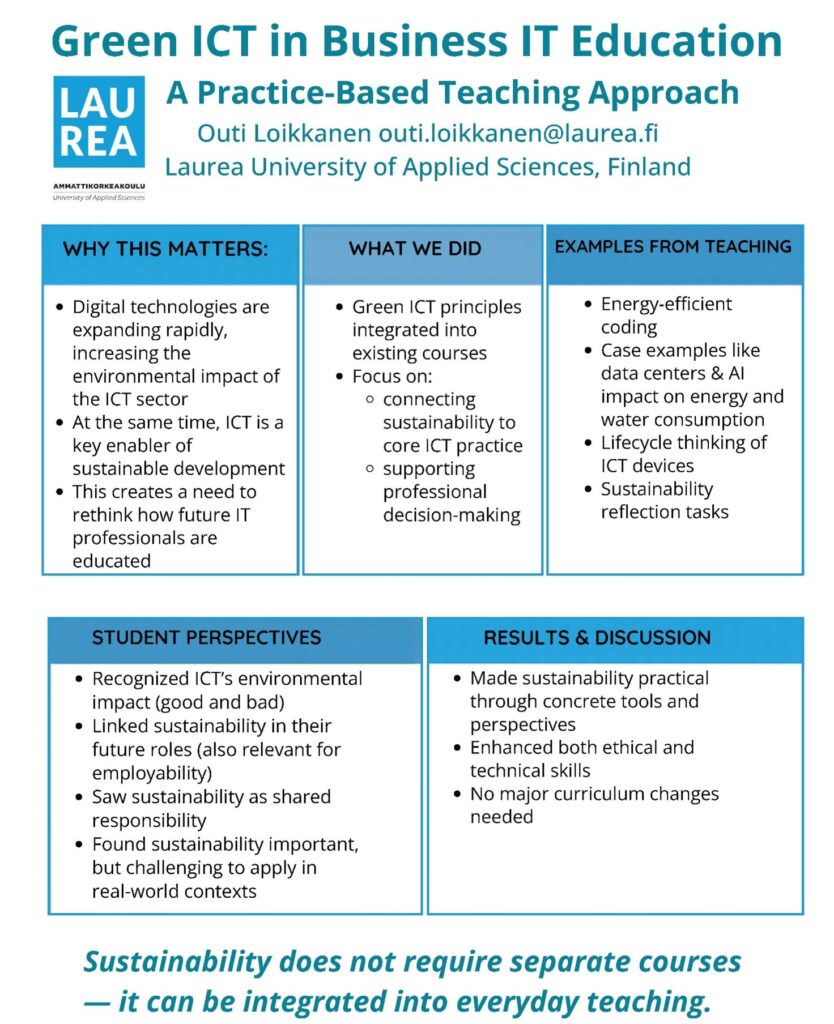
Picture 2. A summary about Outi Loikkanen’s conference presentation of how green ict can be integrated into teaching. Picture Outi Loikkanen.
Presenting in English to an international audience for the first time was both exciting and slightly intimidating beforehand. It is one thing to discuss teaching and digitalization in familiar local contexts, and quite another to stand in front of professionals and researchers from different countries and present your own work in an international conference setting.
In practice, however, the atmosphere turned out to be encouraging and supportive. Many participants approached me after the presentation to discuss similar challenges in their own institutions. It quickly became clear that many higher education organizations are currently asking very similar questions: how can certain topics, like sustainability or AI skills, be integrated into education without continuously adding separate courses and additional content to already full curricula?
One particularly rewarding aspect of the experience was realizing that practical teaching development work is also valuable in international contexts. Conferences are not only about presenting large-scale research projects. They are also spaces where educators can share experiments, observations and practical approaches that may help others who work with similar issues.
Learning Beyond One’s Own Presentation
Participating in the conference was valuable not only because of presenting my own work, but also because of the opportunity to learn from others. Listening to presentations from different countries and educational systems helped broaden my understanding of how higher education is currently evolving in response to AI and digital transformation.
The conference highlighted how rapidly educational practices are changing. Many presenters described situations where teachers are continuously adapting courses, assessment methods and teaching practices to a world where AI tools are already part of students’ everyday lives.
At the same time, the discussions reinforced the importance of maintaining human interaction, critical thinking and ethical reflection alongside technological development. Technology alone does not solve educational challenges, but it can provide new opportunities when used thoughtfully.
AI as a Practical Tool in Education
One interesting observation was how quickly discussions around artificial intelligence have moved from experimentation to practical everyday use. In many presentations, AI was no longer presented as a future possibility, but as something already integrated into teaching, planning, assessment and communication.
Different institutions shared experiences of using AI to support students’ learning and save time in routine tasks. One keynote presentation particularly emphasized the importance of human-centered approaches in educational AI. Rather than focusing only on measurable outcomes such as grades, clicks or activity logs, the discussion highlighted broader aspects of learning, including motivation, reflection, belonging and learner well-being (Softic 2026).
At the same time, many presentations also highlighted the challenges connected to AI adoption. Questions related to ethics, critical thinking, responsible use and assessment practices were discussed repeatedly during the conference. Similar developments have also been discussed more broadly in recent higher education research on AI adoption and its benefits and challenges for both students and educators (Kalnina, Nimante & Baranova 2024).
For me, one of the most valuable aspects of the conference was hearing how educators in different countries are approaching very similar questions. Even though educational systems differ, many concerns and opportunities related to AI seem remarkably shared internationally.
The conference also provided many new perspectives not only on teaching and pedagogy, but also on the broader use of AI in working life and higher education. Listening to other presentations sparked several ideas that may be useful in future course development and project work.
Looking Forward
Looking back, participating in IDEAS’26 was an important professional experience. Beyond presenting a paper, the conference strengthened my confidence in participating in international academic and professional discussions. It also highlighted how strongly themes such as sustainability, AI and digital responsibility are currently shaping conversations in higher education across Europe.
For many educators, international conferences may initially feel distant or intimidating. My experience in Porto showed that they can also be approachable spaces for sharing practical work, exchanging ideas and discovering that many others are working with the very same questions.
References
- IDEAS’26 2026. International Conference on Innovation, Digital Education, Artificial Intelligence and STEAM. Conference homepage. Retrieved 18.5.2026.
- Kalniņa, D., Nimante, D. & Baranova, S. 2024. Artificial intelligence for higher education: benefits and challenges for pre-service teachers. Frontiers in Education, 9. Retrieved 18.5.2026.
- Softic, S. 2026. Human-Centered Learning Analytics in Education. Presentation at IDEAS’26 Conference 14.5.2026. Porto.
- Visit Porto 2026. Official tourism website of Porto. Retrieved 18.5.2026.