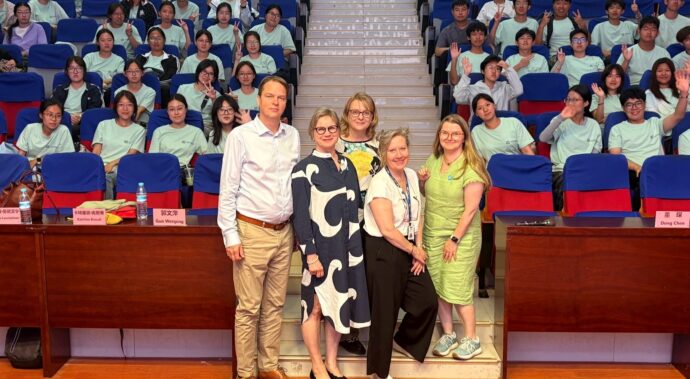
Sini Aalto-Friman
22.5.2026
This article is about visiting the partner university of Laurea, University of Granada for their International Week. The objective of this article is to introduce one of Laurea’s partners to Laurea staff members and to give practical tips about arrival, the city and the university.
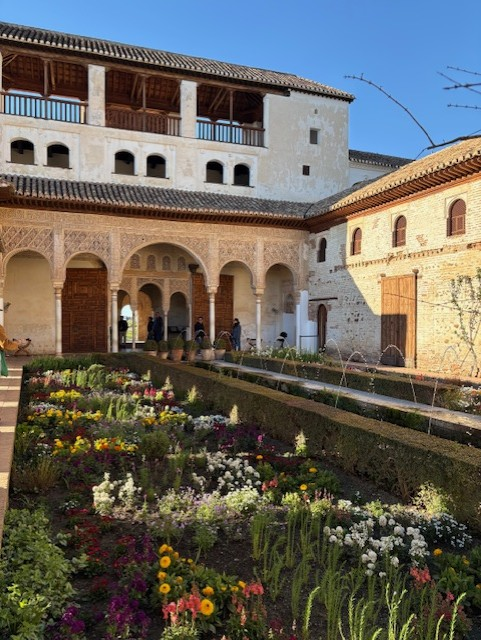
University of Granada
University of Granada was founded by Charles V in 1526. In the opening session Ms. Evangelia Tzeremaki described University of Granada as number one in Europe regarding internationalization, an intercontinental university. Their internationalization strategy is approved by the state.
There are seven campuses in three cities of Granada, Melilla and Ceuta. In Granada, the campus buildings are located all around Granada. 25 per cent of citizens are in some ways part of the university, either students or staff. There are about 250 000 students in Granada.
As of early 2026, there are 73 European Universities alliances supported by the EU, involving nearly 650 higher education institutions across 35 countries. These alliances aim to boost transnational cooperation, merging campuses and research to create a ”fifth freedom” to study and work across borders without boundaries . (Aalto-Friman 2026). The University of Granada coordinates the Arqus European university alliance, which was one of the first European University Alliances. 85 per cent of Spanish universities are involved in European alliances. In the Arqus Alliance, they share extensive experience in joint projects and a common profile as internationalized institutions with deep regional engagement in medium-sized cities. (Aalto-Friman 2026) The workshop about “Impact of the Arqus European University and Alliance at the UGR: its transformative change” was especially interesting. The speaker was Inmaculada Yuste, who works as Arqus Officer.
In the session we discussed similarities and differences as well as challenges and possibilities in the alliances, since Laurea belongs to the PIONEER alliance which is also a European Alliance funded by the European Commission (Laurea 2025).
University of Granada has over 800 bilateral and multilateral exchange agreements, over 50 international academic cooperation projects (Coimbra Group Network), 70 scholarship calls in a year and over 1000 partners in research projects around the world. They attend annual international conferences, like NAFSA. University of Granda actively participates in multilateral consortia, networks and associations with other historical and prestigious universities. They have students from over 110 countries. Before COVID, University of Granada had 3000 exchange students in and out. The university coordinates housing for most international students but cannot guarantee that for all. They provide a 3-course meal for students on campus for the price of 4,5e, but not for visiting staff. The restaurant offers breakfast, snacks, and full lunches on campus. They have an active mentor programme, where local students assist their international peers with initial administrative procedures. Students who have been abroad volunteer to help new international students. There are 10 students per mentor, and matching is done automatically online. This helps with academic, cultural, and linguistic adaptation during the exchange. (Aalto-Friman 2026)
Their Modern Language Centre is one of the leading institutions in Spain in the field of teaching Spanish and foreign languages, prestige guaranteed by the quality and experience of its teachers. They are an official language training center for language level certifications as well.
In ARWU ranking University of Granada is one of the highest-ranked universities in Spain and in the top 300 universities in the world. University of Granada highlights their socioeconomical impact. They are one of the top universities in Spain regarding sustainability. (Aalto-Friman 2026)
International Week: “Navigating Internationalization: Tools and Practices for IROs”
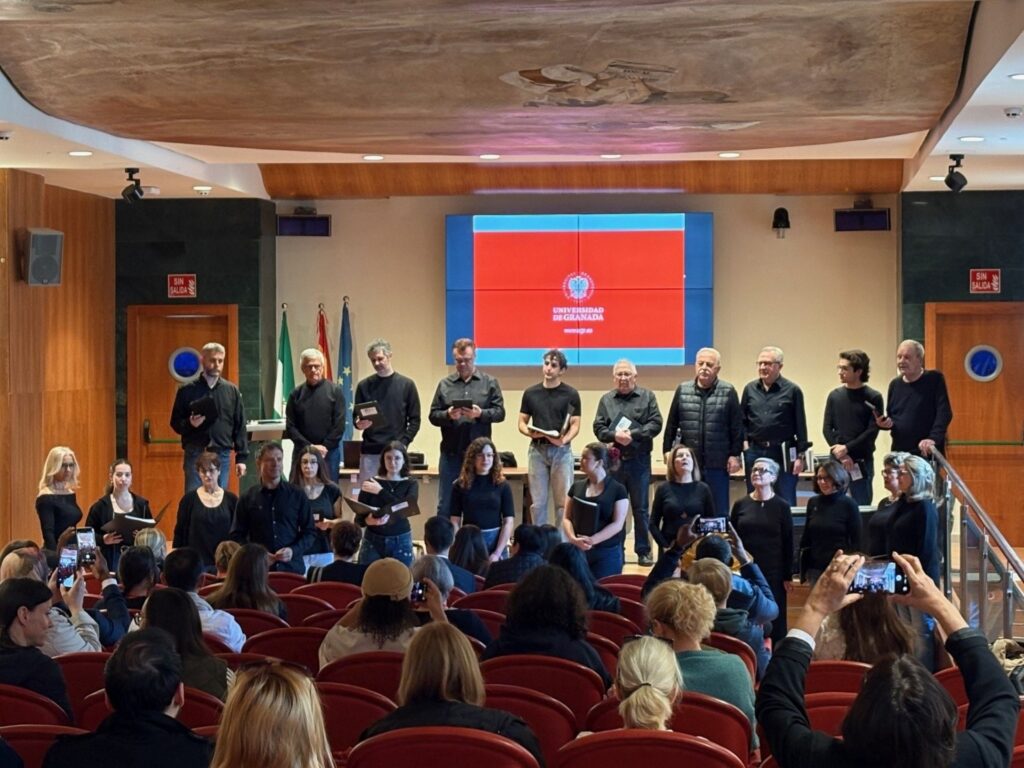
This week-long training program gathered about 60 guests from 30 countries all around the world. I was happy to be selected to participate, since over 100 applied. I was the only one from Finland and proudly representing Laurea and PIONEER Alliance in the sessions.
The 35th University of Granada International Staff Week was designed to foster knowledge exchange, strengthen international cooperation, and improve communication strategies within the context of higher education mobility and internationalization. Each day included interactive sessions, group discussions, and practical activities focused on the following key topics:
- Intercultural Communication
- Erasmus+: Students Abroad – What Could Go Wrong?
- Management of International Agreements:
- Improving Communication with Students
- Internationalization Beyond Mobility
- Managing Erasmus+ KA171 Mobility Projects
- Evaluating Transparency in the Administration of Grant Programs
- European Alliances Initiative
- Emergency Management in International Mobility
Personally, I found the session about intercultural competence in business life the most interesting and a good reminder of topics that I studied a long time ago. This was by Professor Angel Miguel Felices from Department of English and German Philology. In the session, the importance of intercultural competence was highlighted. We discussed cross cultural business behavior by Richard Gesteland, the familiar Hofstede theory of Cultural Dimensions and the low and high context cultures and polychronic and monochronic cultures theory of Edward Hall.
Finland is monochronic, ruled by the clock and Spain polychronic, since relationships are more important than time. This explains well how it is easier to work with people from the same cultural context. Finnish people are also often more deal focused than relationship focused. It was interesting to learn that for Spanish people trust is very important, they have the capacity to improvise, the hierarchy is strong and face saving is important. They see that critique towards work is critique towards them. Direct communication can be seen rude.
We discussed the role of silence in different cultures, like in Japan silence often means no. I also learned that Andalucía is more indirect than other parts of Spain. For example, they say “we´ll see” instead of “no”. All in all, 65 per cent of our communication is nonverbal and 35 percent is verbal. (Aalto-Friman 2026) That is something important to remember in our communication.
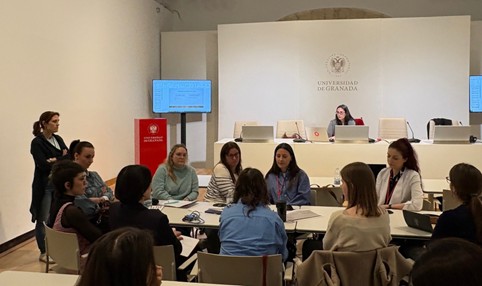
Connections and cooperation ideas between Laurea and Granada
What we can learn from their organization of international week was that they have three interns helping in international office and during the international week and they are familiar with organizing annual international weeks. They organize four staff weeks per year, in March, April, May and October for different target groups, like international relations, IT, library etc. They also have an international welcome center catering for the needs of international doctoral candidates, researchers and visiting staff.
Regarding the teaching fields and language of the university, the partnership agreement between Laurea and University of Granada is in hospitality management, but the students have taken business courses in Granada. They also teach social services and health sciences, but mostly in Spanish. They describe that they have a modest academic offer in English and Spanish the main language of the university.
Their goal is to be one of the best leading universities in artificial intelligence, staff training, and improving abilities in AI. This is something that we have in common, since Laurea has, for example, organized the international AI Symposium as well. Granada has a cybersecurity master programme that could be an interesting connection.
Library services are good in Granada, since each faculty has their own library, so this could be a visiting destination for Laurea library staff.
University of Granada has a “Unidad de Igualidad y Diversidad”. This unit is responsible for promoting gender equality, as well as inclusion and respect for sexual and functional diversity within the university environment. The Arqus Alliance has also an inclusion work package including strategy, staff international week and to create a protocol on how to adapt inclusive matters into action. This is a connection point to the PIONEER EDI&Mobility Pilot that I am leading. The Erasmus+ 2021–2027 program prioritizes inclusion and diversity, aiming to provide equal access for participants with fewer opportunities, including those with physical disabilities, health issues, economic barriers, or remote areas. There is also an Inclusion and Diversity strategy created in 2021.
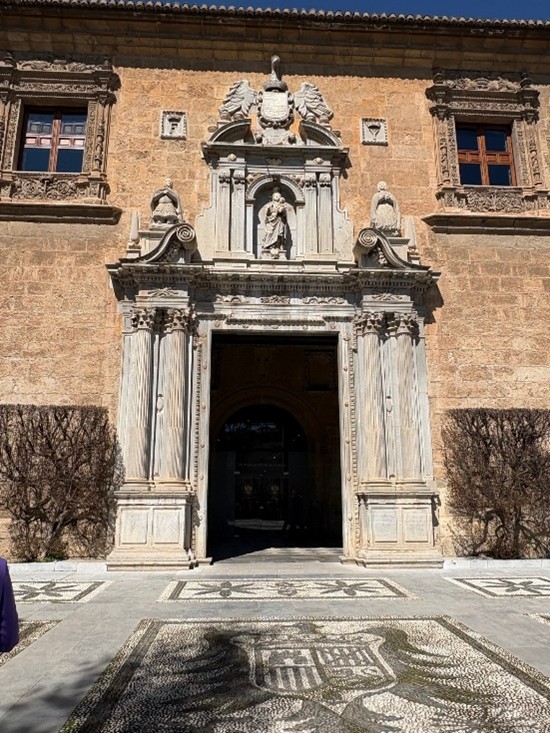
University of Granada is connected with the University hospital in Granada where students do trainings. This could be an interesting place to visit during staff exchange for Laurea lecturers. We visited also the historical “Hospital Real”, which was built 1511 and has functioned as a mental health hospital and maternity ward until 1970. Currently it works as a rectorate and administrative building of University of Granada.
University of Granada has 150 RDI projects and there have been project plans between Laurea and Granada currently. Previously Laurea and University of Granada have been in the project MOTION together, which was a three-year Erasmus+ Strategic Partnerships project. So, there are many shared points of interest between Laurea University of Applied Sciences and University of Granada!
Arrival, tips and City of Granada
Granada has about 233 000 inhabitants. Granada is a vibrant city of culture and literature all year round, and it has several historical buildings and sights. You also get free tapas when buying a drink if you go to local restaurants. The most touristical ones are close to the cathedral and there you do not get free tapas usually. The city is perfect for visitors and students since it has a lively restaurant and bar scene. The city is 45 minutes from Sierra Nevada Mountain and from the beach.
It is the easiest way to take a direct flight from Helsinki to Malaga. From Malaga airport you can take a direct bus to Granada on the ALSA bus. Please note that it is wise to book the ticket online, since currently Granada is a popular destination all year round. The bus takes usually 2 hours 15 minutes to 2 hours 30 minutes. It is also important to book a seat when buying the ticket, otherwise you may not have a seat at all. Note that on Sunday shops are mostly closed in Malaga, if you want to stop there before or after.
When arriving at Granada bus station, there is a bus station outside and you can take a direct bus to city center. You can pay by tapping your credit card on the bus. There is also a possibility of buying a physical travel card and downloading money there. The bus rides are cheap, 1.6e each, so it is not necessary to buy a travel card. Note that if you download the app and insert money there, it does not work on all the buses, so some international colleagues lost all their downloaded money.
The hotels are in city center, and the center is small and you can walk easily to different locations. There are minibuses to bring you up the hill, if you want to visit the most important sight, Alhambra. You should also buy the ticket well in advance if you want to visit the Nasrid palace, the most important sight of Alhambra and the whole of Granada. In Granada hotels and restaurants in the city center you can communicate in English. Outside center, in shops, for example bus drivers speak only Spanish. It is recommended to study a bit Spanish in advance.
Wear proper shoes, since cobble stone streets can be heavy for your feet. Wear also layers when dressing up, because in the sun it is warm, 20-25 degrees in March already but in the morning and evening it is much cooler. Remember the time of the “siesta”, it can be from two to six in the evening. Many shops close then.
References
- Aalto-Friman, S. 2026. University of Granada International Relations Week 2026. Unpublished personal material.
- Laurea 2025. European PIONEER university alliance focuses on sustainable development of future cities – Laurea-ammattikorkeakoulu Referred 30.4.2026
- Implementation guidelines – Erasmus+ and European Solidarity Corps Inclusion and Diversity Strategy: https://erasmus-plus.ec.europa.eu/fi/document/implementation-guidelines-erasmus-and-european-solidarity-corps-inclusion-and-diversity-strategy .Referred 30.4.2026
- Laurea n.d. From Overtourism to Innovating Sustainable Solutions in the EU – Laurea-ammattikorkeakoulu Referred 2026.