Eija Mäkelä
15.6.2026

Hanna Naarmala
15.6.2026

Marjo Pääskyvuori
15.6.2026
Iscte University Institute of Lisbon is part of the PIONEER Alliance, a network of ten European higher education institutions that promotes the strategic development of future cities. Through its activities, the alliance aims to strengthen students’ capacity to succeed sustainably in the future world of work (Laurea University of Applied Sciences 2026). This aim closely aligns with Laurea’s guidance practices, which focus on supporting students in building future-proof competence pathways based on their individual learning and competence needs.
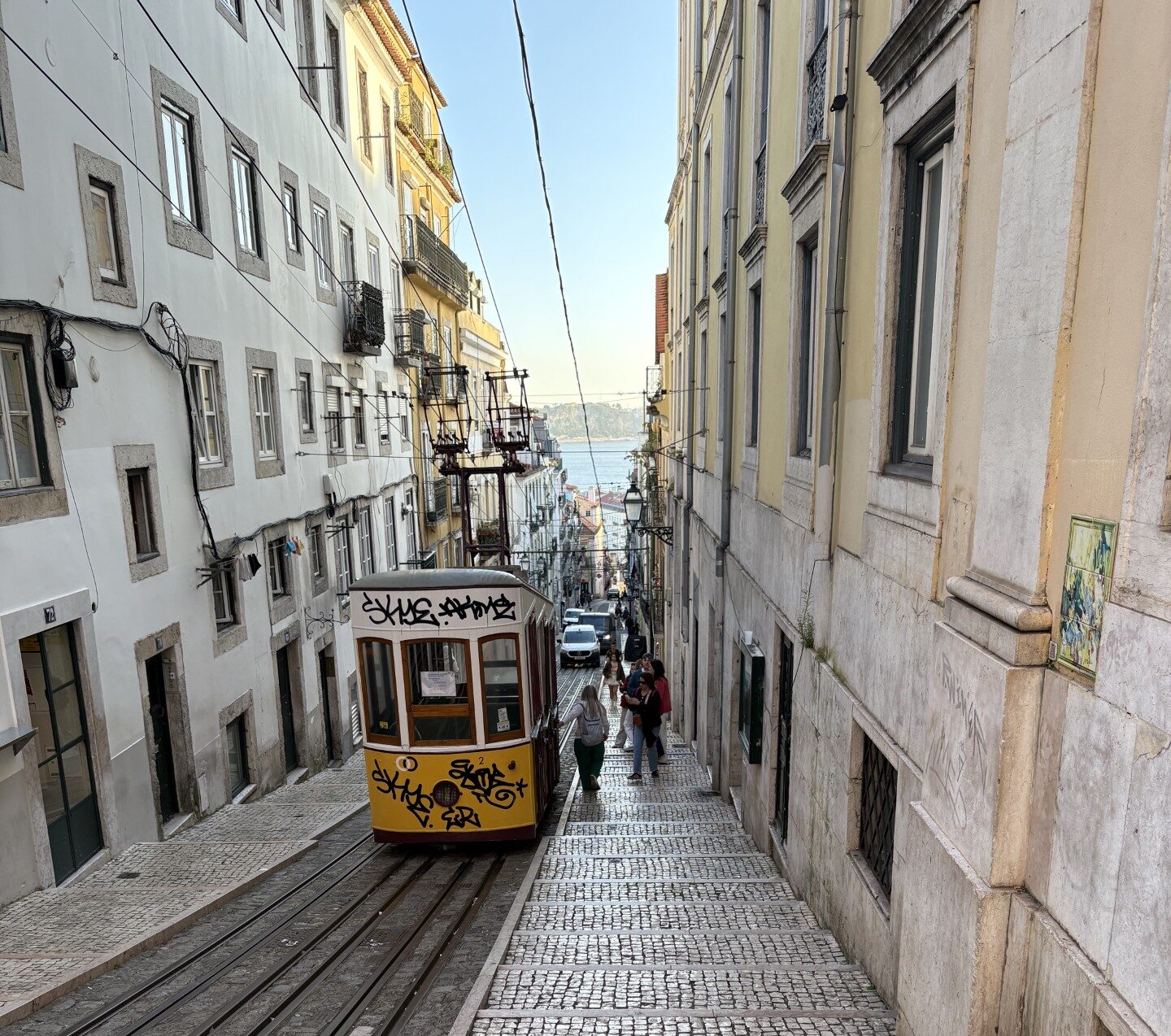
Through staff mobility, the authors of this article had the opportunity to network with experts from one of our partner institutions, Iscte in Lisbon. The primary purpose of our study visit was to explore models of student guidance and to exchange good practices, particularly from the perspectives of study skills and career guidance. We also reflected jointly on how career guidance can support students in adapting to a changing world of work, where competence requirements evolve rapidly. In addition, we discussed the challenges and possible solutions for strengthening competence-based guidance.
Iscte – University Institute of Lisbon – is one of Portugal’s first modern universities. It was founded in 1972, with its main focus on the study of labour and social dynamics in a rapidly changing world. Currently, Iscte has five schools on two campuses: Iscte Business School, the School of Sociology and Public Policy, the School of Technology and Architecture, the School of Social Sciences and Humanities, and the School of Applied Digital Technologies. (Antão & Jordão 2026; Iscte 2026a.)
Iscte offers 26 undergraduate programmes, 70 master’s programmes and 25 doctoral programmes. The institution has just over 14,600 students and approximately 1,100 staff members. International students make up 23.53% of the student population, while there are only around 30 master’s and doctoral programmes taught in English. (Iscte 2026d.) As a result, many international students study in programmes where Portuguese is the language of instruction. Everyday life is facilitated by the typically Portuguese approach known as desenrascar, referring to the ability to navigate changing situations and creatively find solutions, even in challenging circumstances. (Amore et al. 2026.)
Soft Skills as the Student’s Superpower
In higher education, it is increasingly important to consider how best to support diverse student populations in strengthening soft skills such as study skills, critical thinking, and adaptability to change. These skills refer to transferable skills that can be applied across different jobs and are essential for lifelong learning. When combined with disciplinary competence, these generic skills help students adapt to change, critically evaluate information and actively engage in diverse learning and working environments.
At Laurea, a curriculum reform was recently completed, with the development of generic skills as one of its key objectives. (Nykänen, Korhonen, Nurkka & Erkkilä 2025). Research conducted among Finnish higher education students has shown that approximately half of students do not yet possess adequate critical thinking and argumentation skills. This significant competence gap highlights the importance of research-based support for developing generic skills throughout the entire degree programme. Pedagogical practices and teachers’ attitudes can play a decisive role in fostering the learning of generic skills. While individual courses focusing on generic skills are a good starting point, it is essential to integrate these skills into all studies as part of the curriculum. (Ursin, Hyytinen, Toom & Kleemola 2021, 91; 96–97.)
At Iscte, soft skills are embedded in the curricula as a means of enabling sustainable career paths for students. All undergraduate programmes include courses focusing on transferable skills such as teamwork, problem solving, critical thinking, stress and conflict management, and time management (Iscte 2026d). During their studies, students have the opportunity to learn and develop these skills in multidisciplinary groups through the Soft Skills Lab (LCT). Soft skills are viewed as students’ superpower, supporting their transition into working life and adaptation to ongoing changes. (Iscte 2026b.)
All first-year students select three soft skills courses (a total of 6 ECTS credits). Depending on individual needs, more extensive studies can also be agreed upon with the student. In addition, the Soft Skills Lab offers language studies, including English, German, Mandarin and Spanish as well as Portuguese as a foreign language for international students. Preparatory studies are also available in mathematics, scientific writing and critical thinking. (Mauritti & Mendes 2026.)
The majority of Iscte students come directly from upper secondary school. Many begin their studies due to parental expectations and broader societal demands for higher education. Some students are slightly older, over 23 years of age, and often already active in the labour market, giving them different starting points for their studies. Teaching is mainly delivered on campus through face-to-face instruction. One flexible option for working students is part-time study, allowing studies to be spread over up to six years. (Mauritti & Mendes 2026.)
Most international students at Iscte come from countries where Portuguese is an official language (CPLP). A distinct group consists of students from Portuguese-speaking African countries (PALOP). These students are often challenged by limited Portuguese language skills, financial difficulties and integration issues. The Soft Skills Lab organises free courses and preparatory studies (e.g. Academic Portuguese Elementary, Study Methods and Techniques), specifically targeted at students from PALOP and CPLP countries as well as refugees. The campus also provides a meeting space that international students actively use to receive guidance tailored to their individual situations. (Mauritti & Mendes 2026.)
Promoting Career Planning Skills
Iscte Business School has defined the mission of its career services as “to get students and alumni closer to the job market, and boost their employability, soft skills and career prospects, whether in Portugal or abroad, towards a meaningful and fulfilling professional life” (Iscte 2026c). Each of Iscte’s five schools has its own career services. Career counsellors work in close collaboration, sharing expertise and learning from one another, even though services are implemented somewhat differently due to disciplinary differences. The effectiveness of Iscte’s career services is reflected in the high employability rate of graduating students. (Amore et al. 2026.)
Similarly to Laurea’s Career Services, students have access to individual guidance and a range of workshops, and both institutions use Jobteaser, an employability platform for students and companies. At Iscte, some workshops are organised in collaboration with companies, and events such as open days and networking lunches are also offered. (Amore et al. 2026.)
It was particularly interesting to learn how strongly students are supported in finding, planning and completing curriculum-based internships. Career counsellors clearly stated that their role is to ensure that every student secures an internship place. Iscte’s career services therefore actively maintain extensive and diverse collaboration with public and private organisations as well as companies. One form of collaboration is a sponsorship programme, through which partner companies, among other things, fund career services activities and award student prizes. (Amore et al. 2026.)
Career Services organise several regular exclusive employability events with partner companies. The Career Forum is Iscte Business School’s annual job fair and one of the largest university recruitment events in Portugal, for example, in 2026 more than 70 companies participated both on campus and online. FISTA is the largest forum in technology and architecture, with over 100 companies and 3,400 participants. A particularly noteworthy aspect of FISTA is that the event is organised by students for students. In addition, the School of Sociology and Public Policy has developed the Inclusive Recruitment Forum, which aims to open discussion with organisations and associations on the employability of people with specific needs. This event is organised jointly with all Iscte schools. (Amore et al. 2026.) This provides an impactful example of how equality and inclusion can be promoted in higher education.
At Laurea, students’ holistic development of career planning competencies is supported through personalised guidance and feedback throughout their studies, delivered by several experts in different roles. Central to this is guidance provided by the teacher tutor and the Development of Professional Expertise study module, which focuses on strengthening career planning skills. The central theme of the module is the development of competence identity. Competence identity refers to a temporally evolving understanding of oneself as a professional, encompassing what one knows and can do, as well as how one can further develop and articulate one’s competence (Paaso & Maunu 2022). In addition to individual competence, the module highlights collective competence identity and an ecosystem-oriented way of working in networks and sharing expertise.
Conclusion
During our visit, we also discussed the PIONEER Alliance project with a particular focus on challenge-based education (PIONEER Work Package 4). Partner institutions initially focused on building a shared understanding for example, in relation to accreditation processes. Currently, within Work Package 4, a joint challenge-based course offering is being planned and developed, along with a practical toolbox to support teachers’ work. (Antão & Machado 2026.) Effective network collaboration requires open sharing of expertise and best practices. Through the PIONEER Alliance, both higher education staff and students have opportunities to work not only within regional ecosystems but also in international networks.
At Iscte’s main campus, there was a special wall where anyone could purchase a personalised brick. The funds raised through these bricks are directed to supporting students in financially vulnerable situations. This wall provided a concrete illustration of Iscte’s strong culture of care as well as its overall positive mindset. It was encouraging to see that we share common values, attitudes and respect for students. In the future, it would be interesting to discuss more deeply how competence-based approaches are implemented in everyday practice, for example, how students’ prior learning and individual needs are taken into account in guidance.
This article has used Copilot artificial intelligence to support language editing.
References
- Amore, P., Biscainho, F., de Morais, E., dos Santos Soares, I., Guerreiro, A., Matias, B., Sousa, A. C. 2026. Oral presentation as part of the Iscte visit programme 13 March 2026.
- Antão, P. & Jordão, J. 2026. Oral presentation as part of the Iscte visit programme 12 March 2026.
- Antão, P. & Machado, I. 2026. Oral presentation as part of the Iscte visit programme 12 March 2026.
- Iscte 2026a. About Iscte. Accessed 27 March 2026.
- Iscte 2026b. About us. Accessed 27 March 2026.
- Iscte 2026c. Career Services. Accessed 2 April 2026.
- Iscte 2026d. Iscte in Numbers. Accessed 27 March 2026.
- Laurea University of Applied Sciences. 2026. European PIONEER alliance focuses on sustainable development of future cities. Accessed 25 March 2026.
- Mauritti, R. & Mendes, J. 2026. Oral presentation as part of the Iscte visit programme 12 March 2026.
- Nykänen, A., Korhonen, R., Nurkka, P. & Erkkilä, M. 2025. Yhteisten opintojen kehittäminen AMK-koulutuksen opetussuunnitelmauudistuksessa osallistavalla työotteella. Laurea Journal. Accessed 2 April 2026.
- Paaso, L. & Maunu, A. 2022. Osaamisidentiteetin rakennusaineksia. Ammattiin opiskelevien nuorten tulevaisuuskuvia tutkimassa. Vol 23 Nro 1: Sosiaalipedagoginen aikakauskirja. Accessed 25 March 2026.
- Ursin, J., Hyytinen, H., Toom, A. & Kleemola, K. 2021. Johtopäätökset – lue, kirjoita, ajattele! In: Ursin, J., Hyytinen, H. & Silvennoinen, K. (ed.). Korkeakouluopiskelijoiden geneeristen taitojen arviointi – Kappas!-hankkeen tuloksia, 92-99. Opetus- ja kulttuuriministeriön julkaisuja 2021:6. Accessed 25 March 2026.