Laurea offers students and staff a wide range of opportunities to develop international expertise both in Finland and around the world. To ensure competitiveness, growth and profitability in business – latest knowledge, solutions and the ability to renew are required (Laurea 2026). Funded Research, Development and Innovation projects offer unique possibilities for such development and for active learning in multicultural settings.
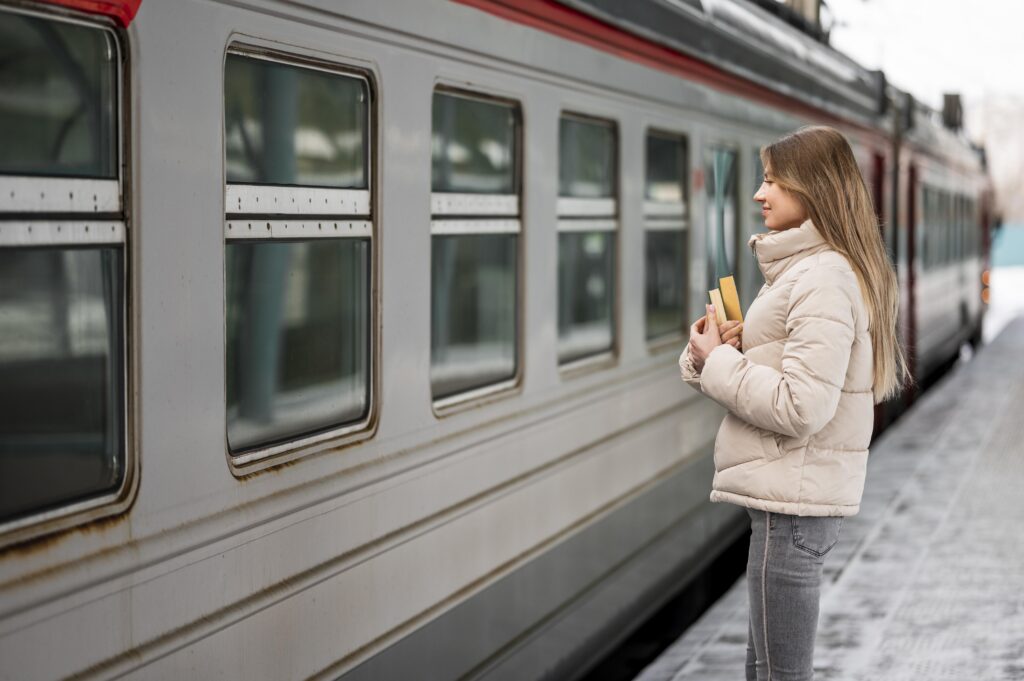
Through Agents of Change – Unhurried Horizons project, an international Learning Tour was organized in September 2026. This 2-week journey 14.-26.9.2026 took 30 students from six HEI’s to an unforgettable journey. Journey took them from Laurea University of Applied Sciences in Vantaa, Finland to Tallinn University of Technology (TalTech) in Tallinn, Estonia and to the School of Economics and Business at University of Ljubljana in Slovenia. In this article, regional development and innovation activities in Tallinn 17.-19.9.2026 are explored.
Tourism in Tallinn
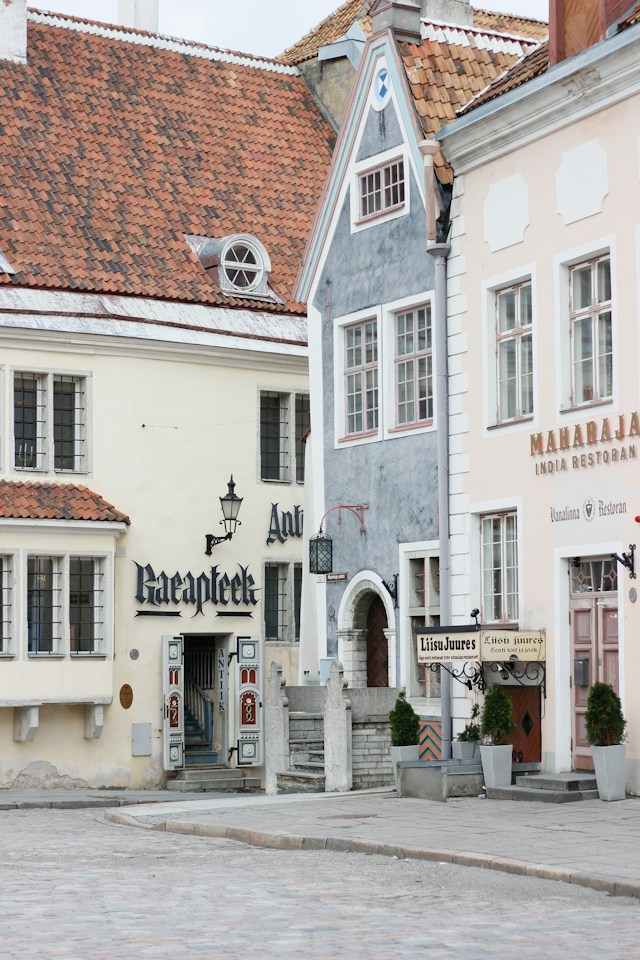
Tallinn is a historic Baltic city combining cultural heritage, digital innovation and new perspectives on sustainable tourism which provides a unique environment where medieval heritage, modern technology, local communities and sustainable tourism approaches meet (Agents 2026). The main attraction, The Old Town of Tallinn, has seen a vast growth in tourism. Number of tourists visiting Tallinn’s Old Town has grown from ca 160 000 in 1980s to ca 3,9 million per year (Ojamäe 2026). As tourist masses keep growing, new destinations and locations must be explored to upkeep the charm of the Old Town and to advance sustainable tourism in Tallinn and Saue.
Slow Tourism
Slow tourism has been explained by Dickinson & Lumsdon (2010) and Oh, Assaf and Bagolu (2016) as “more than just traveling slowly”. It is an attitudinal approach where travelers consciously slow down, immerse themselves in time and place, and pursue well-being as a response to fast-paced modern life, overtourism, and crises like climate change. It emphasizes mindful, sustainable, low-carbon, and experience-oriented travel (Klarin, Park & Kim 2023).
After learning about the basics of Slow Tourism in the beginning of the Learning Journey by professor Ekaterina Shebanova (CETT Barcelona School of Tourism, Hospitality and Gastronomy), students got a chance to explore outside of Tallinn through a learning visit to nearby municipality of Saue. Rene Arvola and Tarmo Tuisk from TalTech had invited local companies and associations to provide students with real-life innovation challenges. Before tackling the challenges at hand, students visited the premises
City of Saue
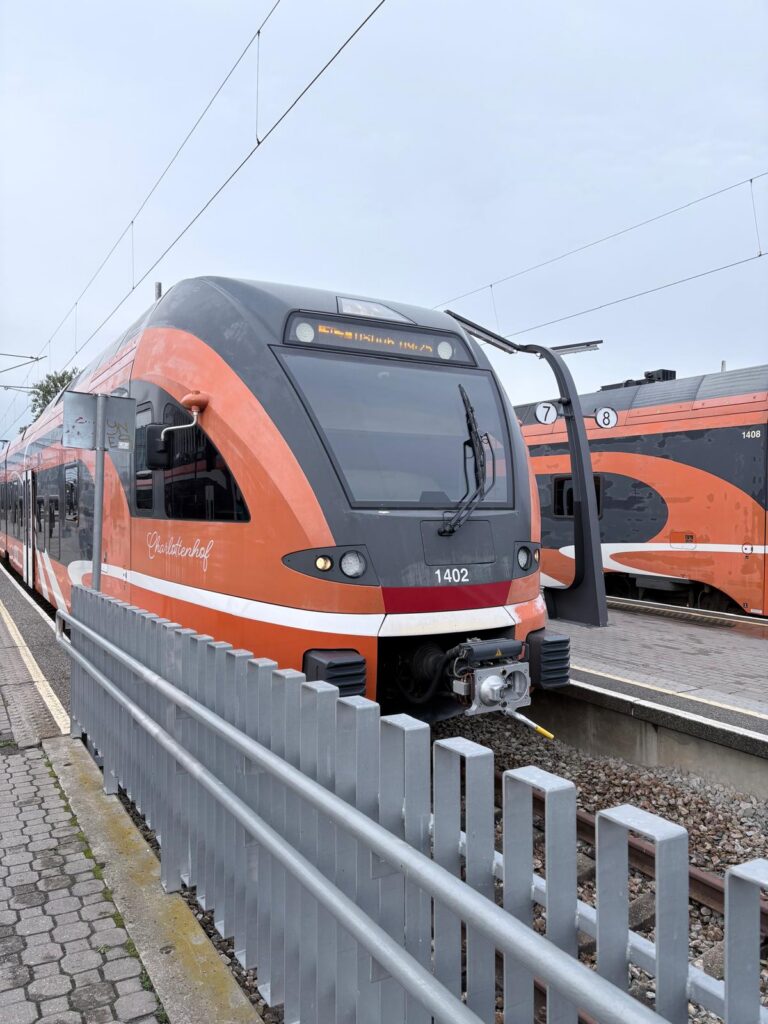
Only few dozen kilometers from Tallinn, Saue municipality is home to the City of Saue, the small towns of Laagri, Riisipere and Turba, and some fifty unique and interesting villages (Saue 2026). Appeal of the municipality is beautiful nature and authentic village life, but these are at risk due to future development plans which will change the character, especially in the City of Saue. The Saue municipal government plans for a new city center and residential area in Saue aims to increase the population of Saue, a town with 6,000 residents, by constructing over 1,000 apartments (ERR 2024).
Saue is known for specific events that draw crowds, yet they are actively looking for possibilities in creating year-round destination image. With Agents of Change, five local actors collaborated with students. The Western-Harju Partnership NGO/Northwest Estonian Geopark, Endla Tourism Farm, Saue Municipality Government, CaravanPArk OÜ and Vanamõisa Open Air Centre presented student teams with challenges related to Slow Tourism. Students were expected to innovate solutions to multiple questions, ranging from “How to create visitor experiences that support both a vibrant destination and a strong local community?” to “How to create an experiential walking tour?”. In this article, the Vanamõisa Open Air Centre case is used to illustrate the work carried out by students.
Vanamõisa Open Air Centre challenge
One commissioner was Vanamõisa Open Air Centre which is a multifunctional event and recreation venue operated by MTÜ Vanamõisa Küla, a non-profit organization dedicated to strengthening community identity and supporting the development of Vanamõisa village in Saue Municipality. The centre hosts a wide range of public, private, and corporate events, including annual fairs and the popular Vanamõisa Christmas Land, attracting thousands of visitors each year. The centre also maintains a nature and cultural heritage trail that introduces visitors to the local landscape and history. As an important local destination, its activities are closely connected to the surrounding community, businesses, and natural environment. (Vanamoisa 2026)
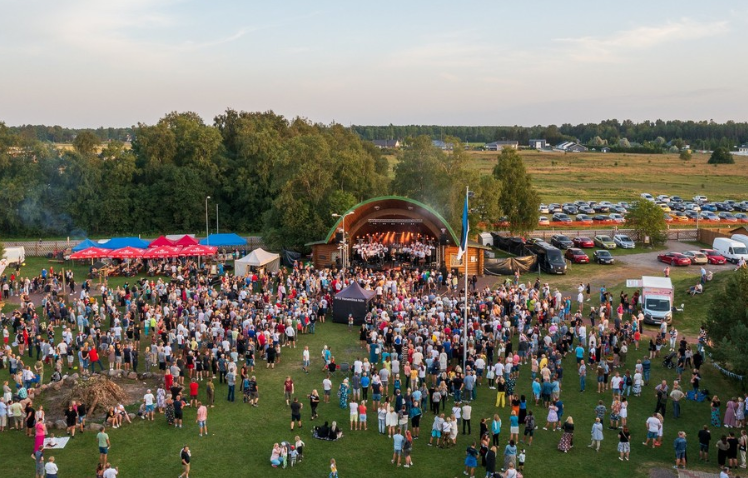
The centre views sustainable development as balancing tourism and event activities with the wellbeing of local residents and the quality of the living environment. While visitor activities contribute to the vitality and viability of the destination, these also require careful management of impacts such as traffic, noise, and waste. Community participation already forms part of the centre’s operations through volunteer involvement, and future development aims to strengthen local engagement further. In this context, slow tourism is seen as a promising approach, encouraging visitors to stay longer, explore local nature and heritage, and interact with the community, thereby creating meaningful experiences while supporting responsible destination development. (Vanamoisa 2026)
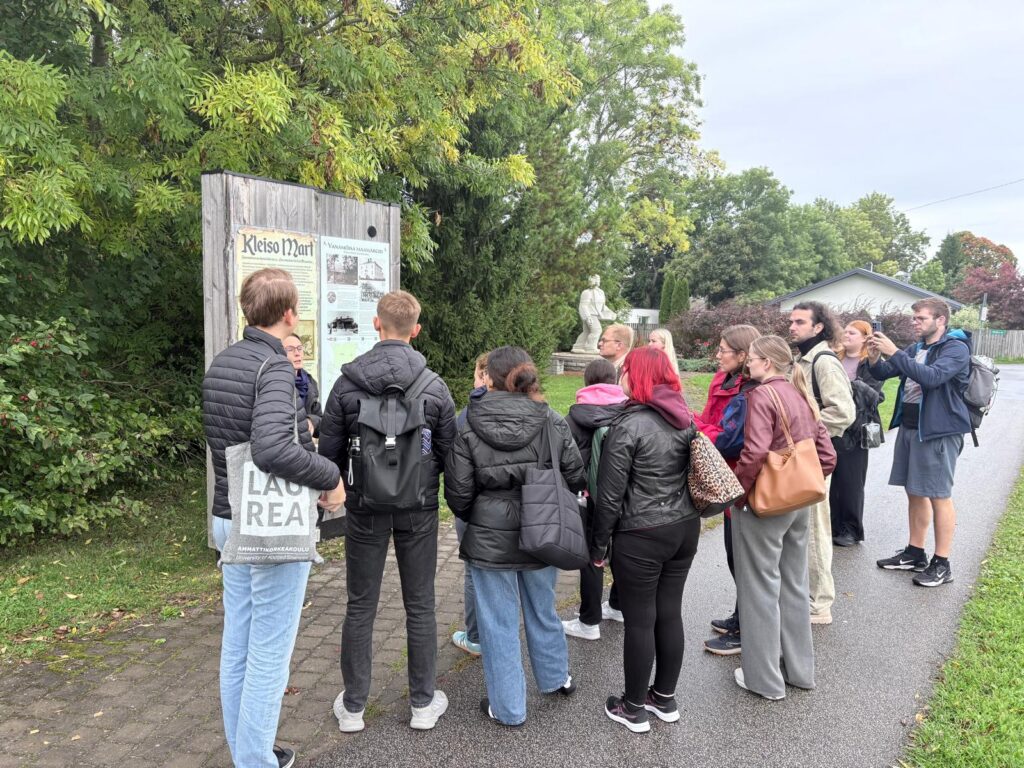
Students got an assignment which led them to develop a concept for a “Slow Day in Vanamõisa”, a visitor experience that encourages people to spend more time in Vanamõisa, discover the area beyond a single event, and connect with local nature, heritage and community. Students described their feeling on the assignment before innovation workshop:
“Interesting! Such a beautiful countryside. It’s easily accessed but I live in Tallinn and I have never visited here before”.
“Saue is very peaceful – a lot of potential and together with Caracan Park there is a possibility to create something new”.
“I think one key question is social media presence – if young people are to be targeted it is a must”.
Innovation workshop outcome for Vanamõisa
After an intensive workshop on 18.09.2026, student team presented their ideas for the commissioner. After carefully examining the challenges and possibilities, their suggestion was to create a cultural calendar – by extending current event portfolio they see the potential of Vanamõisa to grow. Students describe the possibilities “From a slow tourism perspective, the company could develop more authentic Estonian cultural experiences, such as traditional markets, a “Traditional Day” with brunch, hiking, animals, and local activities. It could also organize cultural events such as Mardipäev, giving visitors the opportunity to discover Estonian traditions and spend a meaningful day in a local environment,”. (Abbes, Ehredt Suau, Girčius, Halonen, Saar & Trifunovc 2026.)
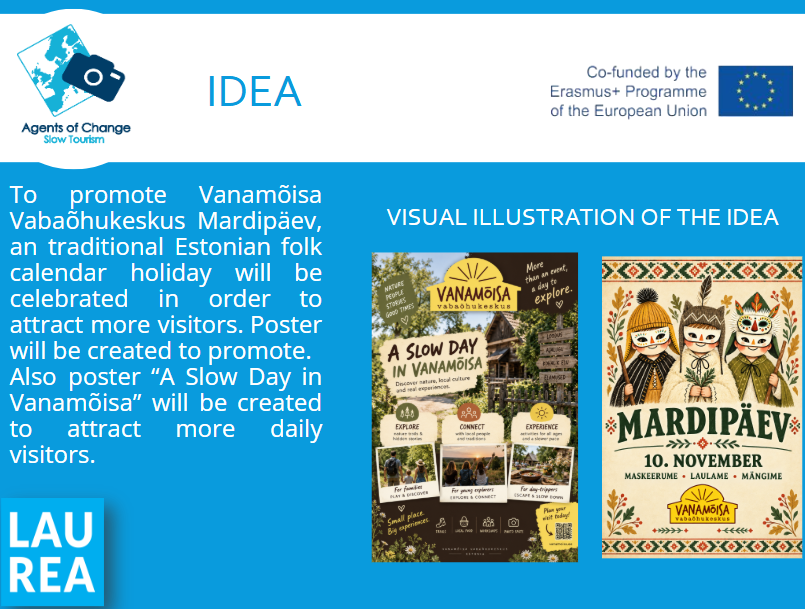
They also highlighted that in future it would be good to start marketing for these events early, through social media (Instagram, Facebook, TikTok) as well as flyers and posters in Caravan Park and Saue and around Tallinn’s Old Town, which could attract tourists. The student team also raised the viewpoint of collaboration as an important aspect. To attract more long-term tourists to visit the events, they suggested more cooperation with Caravan Park.
Conclusions
Multicultural teamwork, unfamiliar surroundings and fast paced learning on an international Learning Tour can be challenging. Following the intensive days in Tallinn, all student teams expressed that they had developed stronger teamwork and cohesion. Visiting and collaborating with Saue was remarkable example of how real-life excursions and collaboration can give a spark for changing behavior. Student teams also highlighted after the Saue experience that they would be keen on exploring further out from the main attractions in the future when they visit bigger cities.
This article is the second in a three-part series of a Learning Tour executed in September 2026. You can read the first article here (in Finnish). In the next article, we will share experiences and learnings from Ljubljana.
Lähteet
- Abbes,A., Ehredt Suau, O., Girčius, S., Halonen, A., Saar, K. & Trifunovc, F. 2026. Case Saue. Unpublished presentation.
- Agents of Change 2026. Agents of Change – Unhurried Horizons – Slow Tourism. Accessed 15.10.2026.
- Dickinson, J. & Lumsdon, L. 2010. Slow Travel and Tourism. Routledge.
- EER, Eesti Rahvusringhääling 2024. Accessed 1.11.2026.
- Klarin, A., Park, E.,Xiao, Q. & Kim, S. 2023. Time to transform the way we travel? A conceptual framework for slow tourism and travel research. Tourism Management Perspectives, 46.
- Laurea UAS 2026. International Laurea. Accessed 19.10.2026.
- Oh, H., Assaf, A.G., & Baloglu, S. 2016. “Motivations and Goals of Slow Tourism.” Journal of Travel Research, 55(2), 205-219.
- Ojamäe, L. 2026. Overtourism: The Example of Tallinn Old Town. Unpublished presentation.
- Saue 2026. Introduction and location. Accessed 5.11.2026.
- Vanamoisa keskus 2026. Vanamõisa Vabaõhukeskus – Ürituste korraldamine, ettevõtete suvepäevad, talvepäevad, ruumid pulmadeks ja pidudeks. Accessed 7.11.2026.