How should we assess the impact of research when outcomes cannot be predicted in advance? Drawing on experiences from the PIONEER Early Career Researchers Training School, this article explores how transdisciplinary research can help communities navigate complexity and create the conditions for long-term societal change.
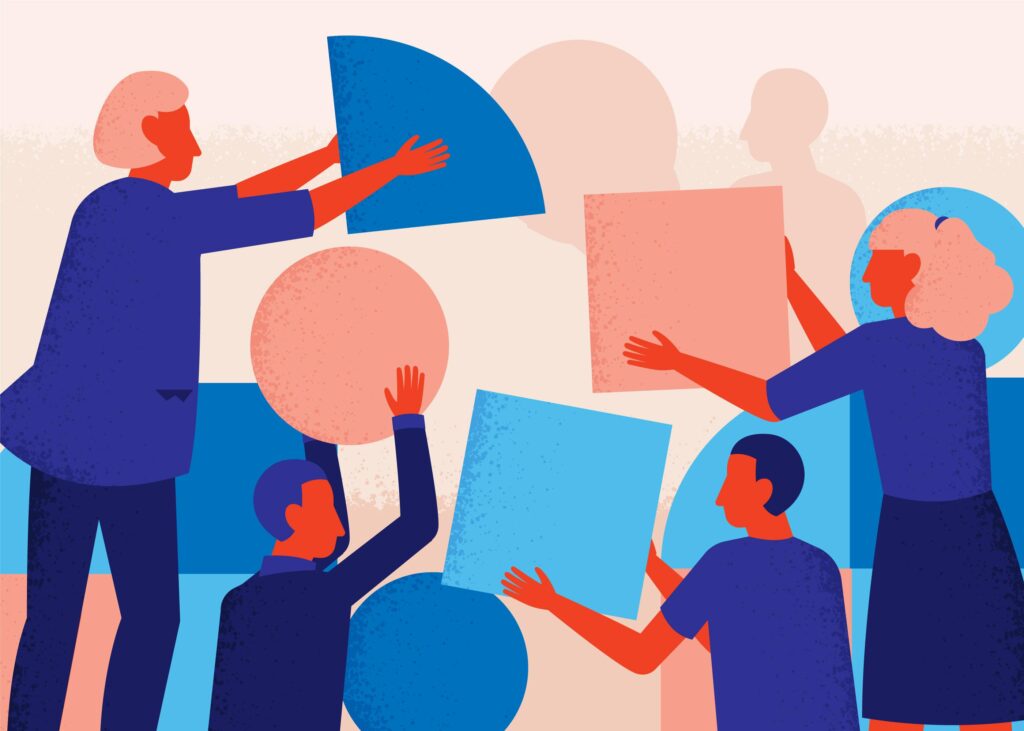
At the end of September 2026, I participated in the PIONEER Early Career Researchers Training School in ’s-Hertogenbosch, the Netherlands. The aim was to learn about how transdisciplinary research can support sustainable urban transformations. Two of our PIONEER* partners, Avans University of Applied Sciences and ICTCE from Portugal, invited together a group of 28 early career researchers, from nine different PIONEER network universities across Europe. Participants represented a wide range of disciplines, including sustainability, engineering, artificial intelligence, data management, urban planning, design and social sciences. The idea was to learn about how we can use transdisciplinary research as a method to strive towards sustainable cities and communities (UN Sustainable Development Goal 11) through a real, applied case.
We were presented with an assignment about an urban transformation which is taking place in an industrial railway area of ’s-Hertogenbosch, the Netherlands. Our task was to develop a research proposal for the Tramkade area. We were asked to consider how the transformation process could be guided in such a way that would preserve the area’s raw identity, while allowing future development. It is perhaps evident that such a case evokes excitement but also raises questions about its sustainability from various perspectives. In this article, it is not my intention to focus on the Tramkade case itself, but rather to use the experience as a lens through which to reflect on what transdisciplinary research can bring to complex problems and how it challenges us to think about research design and impact in somewhat new ways. This experience led me to ask: how should we conceptualise and assess impact in transdisciplinary research, and how can we ensure that participatory processes remain meaningful?
What Does Transdisciplinary Research Mean in Practice?
The starting point for transdisciplinary research is the belief that solutions to many societal problems cannot be produced by researchers alone (Lang et al., 2012). It differs from multi- and interdisciplinary work where different disciplines examine a problem side by side, by extending beyond academia and by involving practitioners, citizens and other stakeholders as contributors to knowledge production and problem-solving. According to Lang et al. (2012), at its core transdisciplinary research is designed to address complex societal challenges by integrating scientific and societal knowledge throughout the research process.
Urban transformations are often described as complex problems because they lack clear definitions and simple solutions (see Rittel & Webber, 1973). They tend to involve conflicting interests and disagreements, are typically perceived differently by various stakeholders, and the starting point for working towards acceptable solutions is that these differences be recognised (e.g. Head, 2022). Working with complex problems, thus, benefits from creating venues where knowledge can be co-created. Transdisciplinary research offers an applied approach, where researchers, practitioners and citizens jointly focus on a selected social problem, contribute to how we understand it, and try to develop practical solutions (Lang et al., 2012). A challenge, however, is to how motivate people to get involved and how demonstrate its impact.
I was somewhat familiar with participatory research approaches. As part of my work in Laurea, I have had the chance to collaborate and learn about formative interventions by taking part in Community Workshops. Community Workshops (Lund & Juujärvi, 2024; Lund et al., 2023) are an adaptation of the Change Laboratory method (Engeström, 2007; Virkkunen & Newnham, 2013) that bring citizens, professionals and researchers together to identify challenges and develop solutions collaboratively. The PIONEER training school, however, paired me up with a group who came from much broader spectrum of disciplinary perspectives than I am used to. My team consisted of researchers who approached the Tramkade assignment from fundamentally different starting points: there were engineers, AI scholars and developers, and data management researchers. After my return, I have caught myself thinking time and time again about the potential of transdisciplinary research and how we could make more use of it for the kind of applied research we conduct at Laurea.
Example: Tramkade as a Case of Urban Transformation
Tramkade has been an industrial site which was turned into living laboratory some ten years ago. This experiment gave rise to a vibrant cultural and creative district. Now, the city ‘s-Hertogenbosch is under pressure to build more housing and the Tramkade area faces a new phase of development. The area is attracting investment and urban renewal. The development plans, however, also raise concerns about how to make the area livable, while preserving the raw characteristics that make the area attractive.
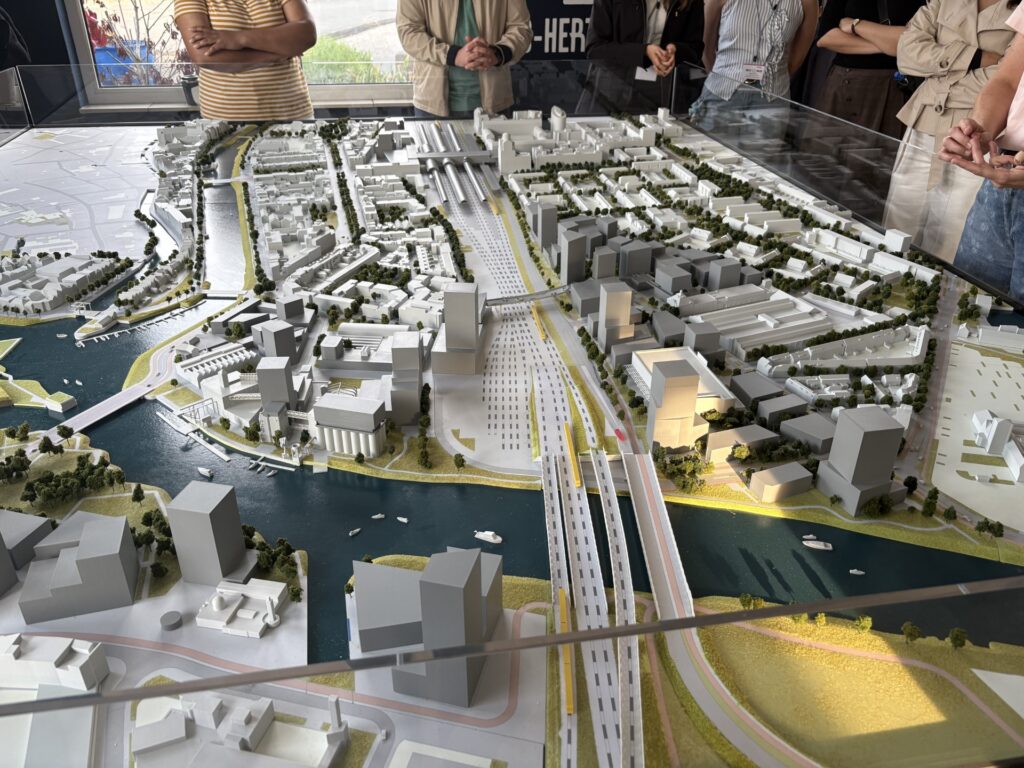
During the week, we had the chance to meet and discuss with various stakeholder groups and get acquainted with the area. The aim was to produce a research plan that would offer insights for the municipality with the transformation process. My group decided to focus on the governance and management of the transformation and formulated the following research question: How can co-creative approaches reduce tensions between redevelopment ambitions, preserve Tramkade’s identity and generate outcomes embraced by diverse communities, thereby supporting a sustainable and resilient future for Tramkade?
Our idea was not to identify a single solution but to better understand how the different stakeholder perspectives could be recognised and integrated into future development processes. The way the entire programme and our group work was formulated encouraged me to start thinking about shared learning processes. How they can be facilitated and what roles we as researchers have in generating and assessing impact? Based on the Tramkade experience, I began to think about the impacts of transdisciplinary research at three interconnected levels: individual learning, collective capacity building, and practical or systemic change.
Towards formulation of research impact in transdisciplinary work
One of the lecturers from Avans made a remark that that transdisciplinary research designs can prove challenging when we apply for grants, because they do not produce standardised outcomes. Given their participatory nature, the impacts tend to be uncertain and difficult to pinpoint. In comparison, more traditional research designs can feel appealing, with impacts that are easier to predict. However, whereas transdisciplinary research will not produce predictable or replicable outcomes, the nature of participatory research gives it potential to produce meaningful and even transformative impacts.
For example, through our discussions with the stakeholder groups in Tramkade three themes came up and resonated with my previous experiences from participatory research.
- Community participants and residents are concerned about how the proposed changes affect them and their wellbeing.
- The different stakeholders hold hopes that are formulated from their points of view, but these create competing or clashing agendas.
- Instead of more participation, people want better participation. Stakeholders want their voices heard but many also experience ‘participation fatigue’. This needs to be addressed as many people share doubts about whether their participation can generate any real, lasting effect.
These themes cut to the core of complex problems and enable us to identify some commonalities that can help us think about the potential impacts we can achieve. For me they also form a framework to think about impact, and the roles researchers can play in securing it.
On an individual level, facilitated transdisciplinary processes help participants identify and make visible the themes and contradictions at hand. For the individual participants this means that in addition to voicing their concerns they can also understand and approach the challenge from various viewpoints. Researchers can support reflection by making learning processes visible to participants.
On a community level, transdisciplinary methods create a setting for collective learning. Facilitated processes help participants develop shared understanding, strengthen collaboration and increase trust for one another. Whilst researchers play role in facilitating the processes, research agendas should also be made transparent: how do we use the information we acquire, what can be expected as a result of the process, and how participants gain access to the possible outputs?
On a societal or systemic level, transdisciplinary methods can create a shared space for co-creation. This means that research processes can be used to generate and pilot solutions and practices, evaluate what works, and draft publications to impact policy and practice. This step is essential in making changes visible. Researchers play an important role in interpreting the results, help develop a local context but also generate knowledge about the best practices and share these across epistemic and policy communities.
Conclusions and learning outcomes from my week with transdisciplinary research
My experiences in the training school and the Tramkade case demonstrated that dialogue, negotiation and facilitated sense-making are at the centre of transdisciplinary processes and key for working with complex problems. For me, as an early career scholar and employee at Laurea this evokes also interesting questions about how we can approach complex societal challenges through transdisciplinary research to try and generate shared understanding and strive towards sustainable change.
Transdisciplinary research can help us identify different perspectives, tensions and contradictions, but in my opinion, it is also paramount we think about how we create a process that retains its meaning and promise. This means that, as researchers, we ought to think about the participatory methods that create a setting where participants have the opportunities to develop a shared understanding of complex challenges, strengthen their capacities for collaboration and create the potential for them to co-design solutions and change practices. Trust and shared understanding, in a way, become the preconditions for impact. But also, we ought to think about the sustainability of impacts. Shared learning process carries meaning, yet impact arises when learning and potential changes are visible.
For me, the week spent in Avans University of Applied Sciences with this group of PIONEER scholars opened up new ways of thinking and formulating participatory research designs. Transdisciplinary research may not produce predictable outcomes, but it offers a very appealing method to try and strengthen the collective capability to navigate complexity and create sustainable change.
* The PIONEER alliance is formed by ten European universities, including Laurea University of Applied Sciences. It is funded by the European Commission. The alliance supports the capacities of students, experts, residents and urban actors with the aim to serve the needs of inclusive, sustainable, and resilient cities.
Lähteet
- Engeström, Y. 2007. Putting activity theory to work: The Change Laboratory as an application of double stimulation. In Daniels, H., Cole, M. & Wertsch, J.V. (eds.). The Cambridge company to Vygotsky. New York: Cambridge University Press. 363–382.
- Head, B. W. 2022. Wicked problems in public policy: Understanding and responding to complex challenges (p. 176). Springer Nature.
- Lang, D. J., Wiek, A., Bergmann, M., Stauffacher, M., Martens, P., Moll, P., … & Thomas, C. J. 2012. Transdisciplinary research in sustainability science: practice, principles, and challenges. Sustainability science, 7(Suppl 1), 25-43.
- Lund, V., & Juujärvi, S. 2024. Community Workshops as a tool for collective learning. Kokemustiedonkeskus.fi. Accessed 13.10.2026.
- Lund,. V, Rantala, H. & Marttila, M. 2023. Change Laboratory uses a collective process to resolve contradictions. Accessed13.10.2026.
- Rittel, H., & Webber, M. 1973. Dilemmas in a general theory of planning. Policy Sciences, 4(2), 15.
- Virkkunen, J. & Newnham, D. 2013. The Change Laboratory. Rotterdam: Sense Publishers.
AI has been used to check the language in this article.