
This article examines students of Bachelor of Social Services experiences of a team-based student exchange and internship implemented on the Costa del Sol in Spain and explores the opportunities the experience offered in terms of learning, wellbeing, and the development of international competence. The article describes a pilot internship model implemented in social services education at Laurea University of Applied Sciences, based on team learning and coaching pedagogy.

Image by rawpixel.com on Magnific
Laurea University of Applied Sciences aims to operate as an internationally competitive university of applied sciences with a strong working-life orientation, and the objective of the pilot was to develop a low-threshold opportunity for internationalization for students.
Introduction
The idea for the international internship learning environment originated during a joint study trip with Bachelor of Social Services (sosionomi) degree students to the European Conference for Social Work Research in Milan (Kultavirta & Varjonen, 2023). The internship learning environment consisted of schools, an early childhood education unit, and other social sector organizations located in the Fuengirola area on the Costa del Sol in Spain. During the pilot, collaboration was also established with Mondragon University’s TeamLabs Málaga.
Internationalization should form an integral part of social services education, and student exchanges in particular offer students opportunities to deepen professional competence, engage in intercultural learning, and develop working-life skills. International internship solutions based on team learning can support students’ sense of community, reflective learning, and the construction of professional identity.
This article describes a team-based internship model implemented on the Costa del Sol in Spain, as well as students’ experiences of participating in it. The aim of the article is to produce experiential and development-oriented knowledge on building an international internship learning environment within social work education. In the future, the intention is to develop the learning environment into a multidisciplinary one.
Planning and Implementation of the International Team learning Internship
In team learning pedagogy, students are active in their own learning processes. The pedagogical approach fosters the development of reflective skills and supports their professional identity. Coaches adopt a facilitative role, listening, guiding, and encouraging students throughout the learning process. Students are given opportunities to make independent decisions and learn through experience. Moreover, they actively seek out information, apply it in practice, and engage in experimentation, thereby deepening their understanding. In this way, students assume responsibility for both their individual learning and the collective learning of the team. (Kavanagh, Gotwalt, & Farrow, 2023.)
Planning of the pilot was initiated within the “Multidisciplinary Internship in Spain”-development group established at Laurea University of Applied Sciences. The Costa del Sol internship learning environment was developed through existing professional networks, with Teija Fontell contributing to the process, and support related to Erasmus student mobility was provided by Maryam Hussein, an expert responsible for international mobility at Laurea. The pilot was launched through an open information session, after which interested students applied for the exchange. Students were selected based on applications, and internship placements were defined through joint discussions.
The construction of the internship learning environment began one year prior to the launch of the pilot. Team coaching for students started approximately six months before the actual international internship period. Before departure, two coaching-oriented meetings were organized with the aim of preparing students for team learning, the international operating environment, and reflective work practices.
The team learning project utilized coaching pedagogy and team learning as its theoretical frameworks (Partanen, 2016; Ristikangas & Ristikangas, 2011; Senge, 1990). During the first week of the exchange, students participated in team-building activities in Fuengirola and attended individual guidance sessions at their internship sites. Throughout the international exchange, students were coached both as a team and individually in accordance with the principles of coaching pedagogy. The pedagogical approach was based on regular dialogical encounters and shared reflection. The international exchange also included a collaborative project with students and experts from Mondragon University’s TeamLabs Málaga. The internship periods lasted ten weeks and were worth 15 ECTS credits.
Students’ Experiences of the Team-Based Student Exchange
The international team-based internship environment developed on the Costa del Sol offered students a low-threshold opportunity for internationalization. The region was perceived as an approachable environment, which lowered the threshold for engaging in an internship abroad. A strong Finnish community operating in the area supported students’ integration into the new environment and provided a stable structure for the internships. The internship placements were Finnish-language working communities, which enabled full participation in client work and organizational activities. This supported the development of professional competence and allowed students to focus on social work practices without the additional burden caused by language barriers. Participating in the internship simultaneously as a small student group strengthened community and peer support. Students reported being able to share experiences, reflect on internship-related issues, and support one another in everyday life. Shared leisure time, excursions, and familiarization with the surroundings reinforced group dynamics and enhanced the meaningfulness of the experience. Environmental factors also influenced student wellbeing, and the sunny and bright climate was experienced as a positive factor supporting coping during a demanding internship period.
Group-based familiarization visits to local social sector organizations, such as the Finnish Seamen’s Mission and Avominne’s Fuengirola office, provided students with concrete insights into the diversity of social work practice (Finnish Seamen’s Mission, 2025; Avominne, 2025). The visits helped students understand the applicability of social work competence in various international environments and opened perspectives on career opportunities beyond Finland. The international internship strengthened students’ professional identity and increased their understanding of cultural and societal differences in social work practice.
Collaboration Project with Mondragon University’s TeamLabs Málaga
As part of the international internship, students planned and implemented a collaborative project with a Finnish school operating on the Costa del Sol. The aim of the project was to design and implement a client-oriented, needs-based group-building functional programme for two seventh-grade classes.
Project planning involved creative ideation, defining client-centred objectives, and teamwork. The final implementation took the form of an Amazing Race–type functional activity consisting of activity stations, developed with a zero-budget approach using the school’s existing materials. The activity day was implemented in collaboration with the school staff.
While the project itself focused on designing and facilitating a group-building experience for younger students, the collaboration also created an important learning opportunity for the students, team learners from TeamLabs Málaga, who participated in the design and implementation of the project together with the students from Laurea University of Applied Sciences.
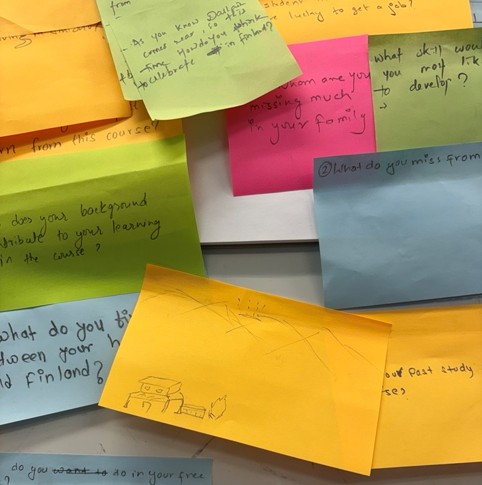
Rather than only supporting the execution phase, the team learners were involved throughout the creative and planning process (Picture 2): identifying needs, defining objectives, generating ideas, and shaping the final experience together as an international team. This allowed them to explain and share some of the core principles behind team learning, especially the importance of learning through experimentation, teamwork, and real, client-oriented challenges.
For many of the first-year team learners, this was also one of their first opportunities to collaborate in an international environment while applying these methodologies in practice. Beyond the academic and project-related learning, the experience also had an important personal value, as first-year team learners travel to Finland as part of their learning journey. Building connections, friendships, and professional relationships with the Finnish students during this collaboration created a sense of familiarity and mutual support that can help them when they later visit Finland themselves.
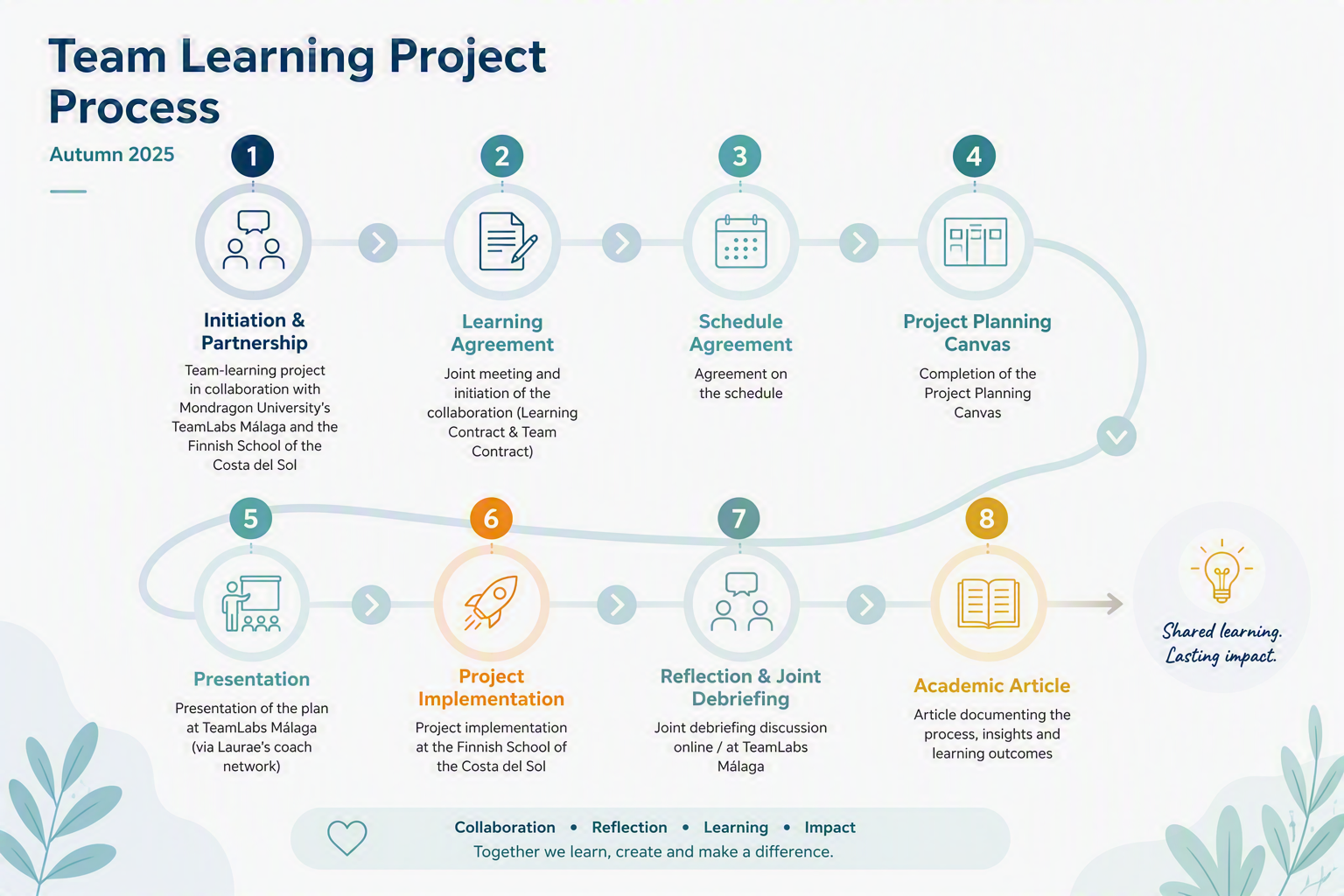
Evaluation and Learning Experiences
The success of the project was evaluated from the perspectives of the partner organisation, participating pupils, and the students themselves. Collaboration with the school was perceived as effective, and feedback was positive. Pupils actively participated in the activities and described the atmosphere as encouraging and supportive of group cohesion.
Students felt that the project strengthened their project management, facilitation, and collaboration skills. Although international collaboration with Mondragon University was not realised to the planned extent due to scheduling challenges, the experience provided valuable learning related to international collaboration and its constraints.
Conclusion
The team-based international internship provided students with a significant learning experience that combined professional growth, a sense of community, and the development of international competence. The experience demonstrates that a carefully planned and well-coached international internship model can support social work students’ professional identity and working-life readiness in a versatile manner. The collaboration project with Mondragon University’s TeamLabs Málaga generated valuable development ideas for the future, and continued cooperation is recommended.
From TeamLabs Málaga’s perspective, this collaboration represented a valuable shared learning experience alongside Laurea University of Applied Sciences, two institutions shaped by similar pedagogical roots, yet enriched by different cultural and educational contexts. Throughout the collaboration, both institutions had the opportunity to learn from each other’s approaches to team coaching, exchanging perspectives, methodologies, and ways of supporting student development within team-based learning environments.
Málaga, with its open and international spirit, proved to be an ideal environment for this exchange, fostering collaboration, mutual learning, and meaningful connections between students and coaches alike. Beyond the project itself, the experience reinforced the value of international collaboration as a way to continue evolving pedagogical practices and strengthening intercultural learning communities. We look forward to continuing to build on this relationship and exploring future opportunities for collaboration together.
Key Learning Experiences
- At the beginning of a project, it is essential to clearly define responsibilities, objectives, and schedules
- Learning by doing strengthens professional competence
- Changes to plans are a natural part of international project work
- Successful projects require flexibility, creativity, and collaboration skills
“I experienced team learning as a communal model that taught and developed professional competence in a different way. For some students, the team learning model may also lower the threshold and increase motivation to participate in internships, as the experience is shared with others. For me, as a student, team learning remained a unique experience—allowing me to hear about other students’ study experiences and to receive peer support during the internship.”
Viivi Koski, student
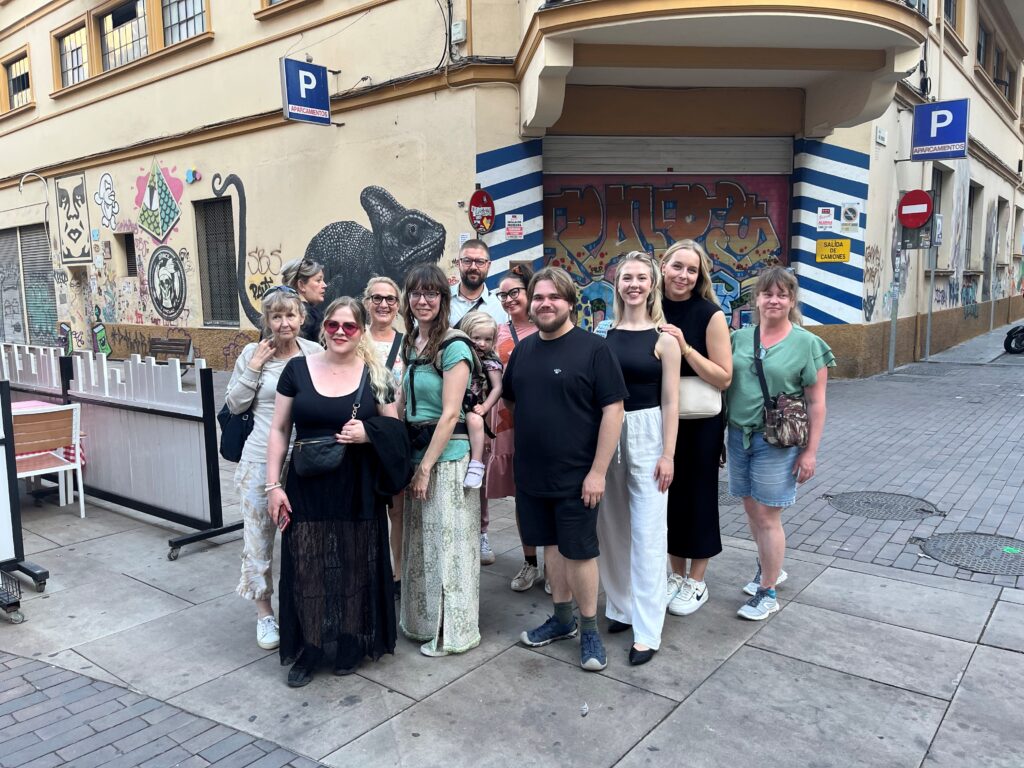
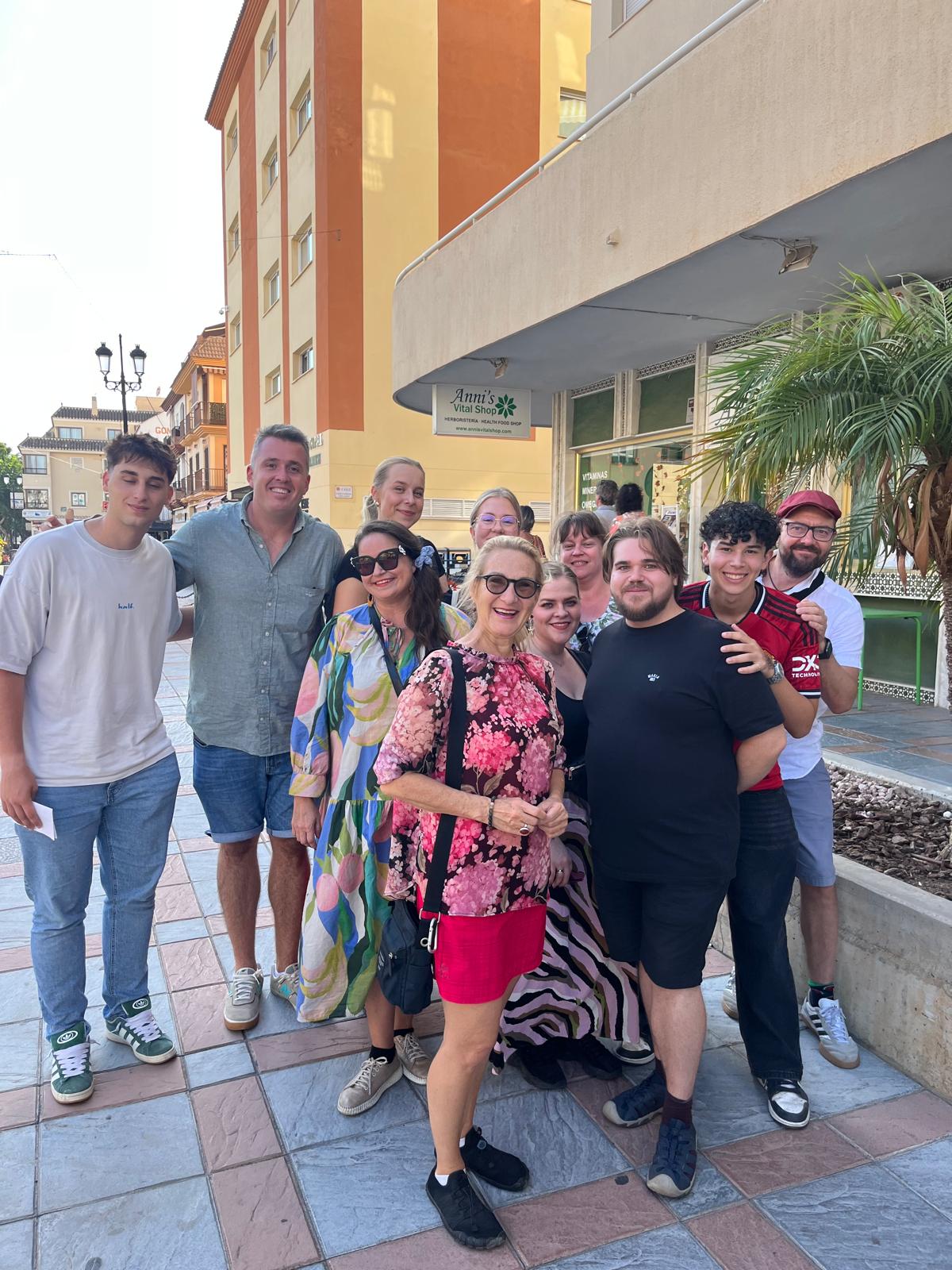
Picture 3: Laurea students and lecturers in Málaga.
References
- Kavanagh, S., Gotwalt, E. & Farrow, J. 2023. Practice-based coaching for project-based teaching: Understanding relationships between coaching practice and teaching practice. Teaching and Teacher Education, 132 (2023)104255.
- Kultavirta, A., Varjonen, K., Kamunen, H., Luoti, J., Tolvanen, I., Paju, C., Norring, M.-A., Pomell, W., Mikkilä, S., & Peltomäki, T. (2023). Kokemuksia sosionomikoulutuksen kansainvälisen opiskelijavaihdon pilotoinnista – Laurea-ammattikorkeakoulun opiskelijaryhmän ja lehtorien matkassa. (Experiences of piloting international student exchange in social work education – Accompanying a Laurea University of Applied Sciences student group and lecturers). Laurea Julkaisut 11/2023. Theseus. Retrieved May 7, 2026.
- Partanen, J. 2014. Välähdyksiä yksilön oppimisesta. Jyväskylä: Partus. Partanen, J. 2018. Tiimivalmentajan parhaat työkalut. Jyväskylä: Partus.
- Ristikangas, M-R & Ristikangas, V. 2022. Valmentava johtajuus. Alma Insights
- Senge, P. M. 1990. The Fifth Discipline. The art and practice of the learningorganization, London: Random HouseHirschovits-Gerz, T., Sihvo, S., Karjalainen, J., & Nurmela, A. 2019. Kokemusasiantuntijuus Suomessa: Selvitys kokemusasiantuntijakoulutuksen ja- toiminnan käytännöistä.